
Last updated September 22, 2026
Level 1 sweep and inspection to the NFPA 211 annual standard - flue, crown, cap, and flashing checked and photographed
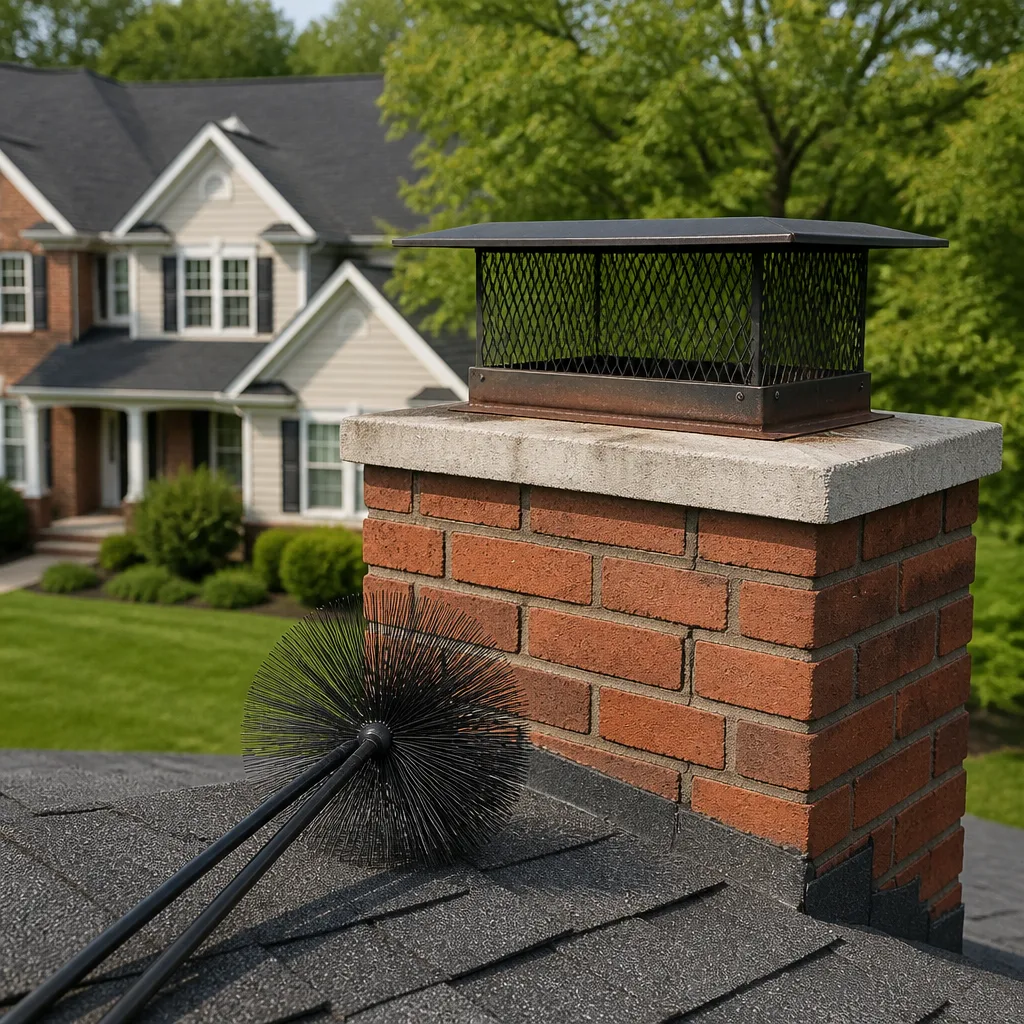
Chimney sweep logs do not sweep chimneys. They loosen some creosote - which then falls where a brush and vacuum still have to collect it.
Gas fireplace service
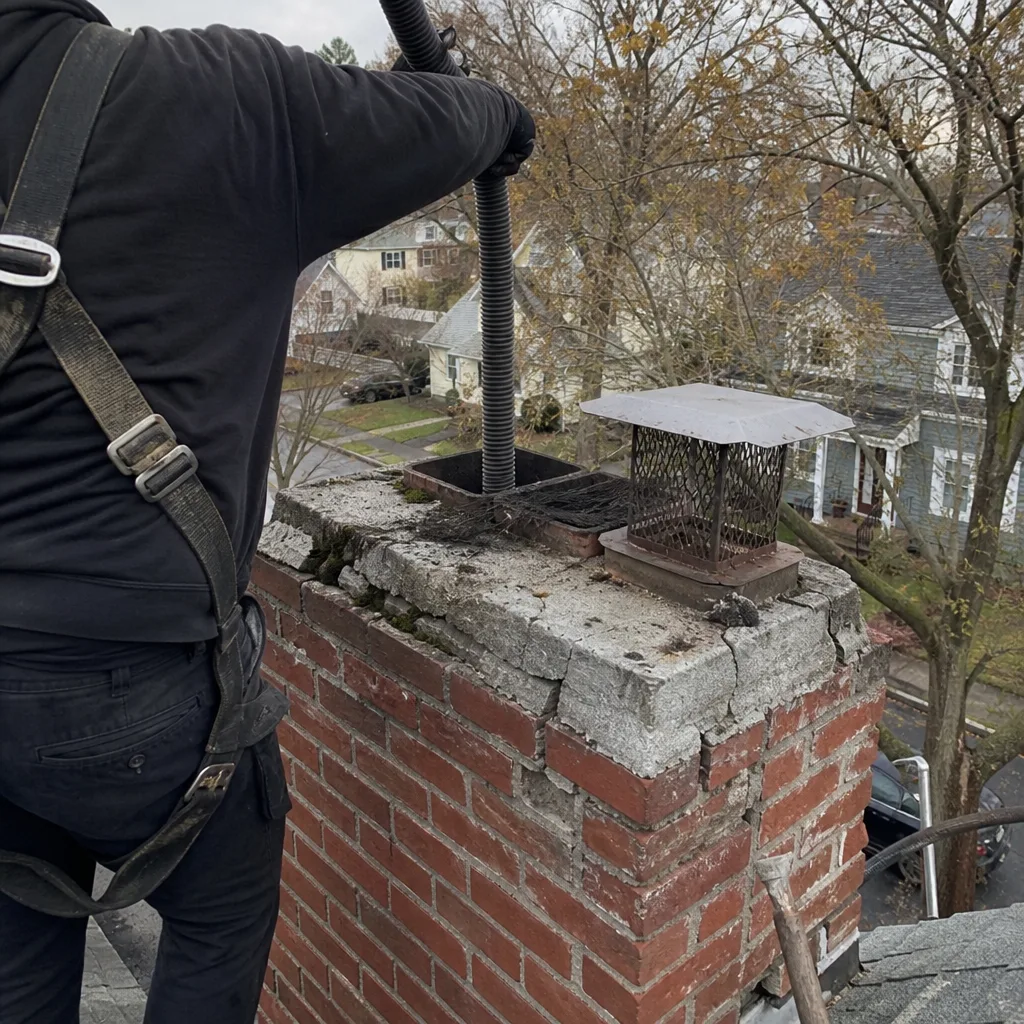 Before
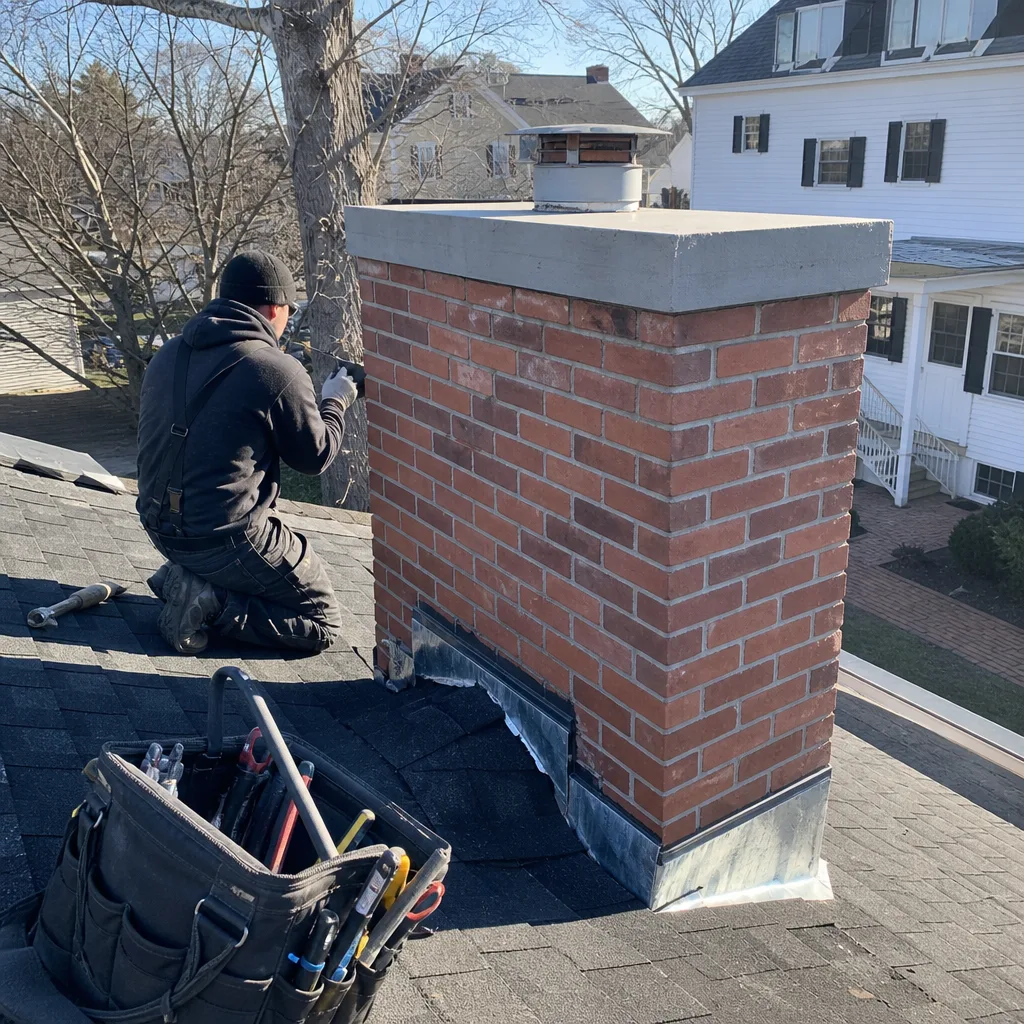 After
After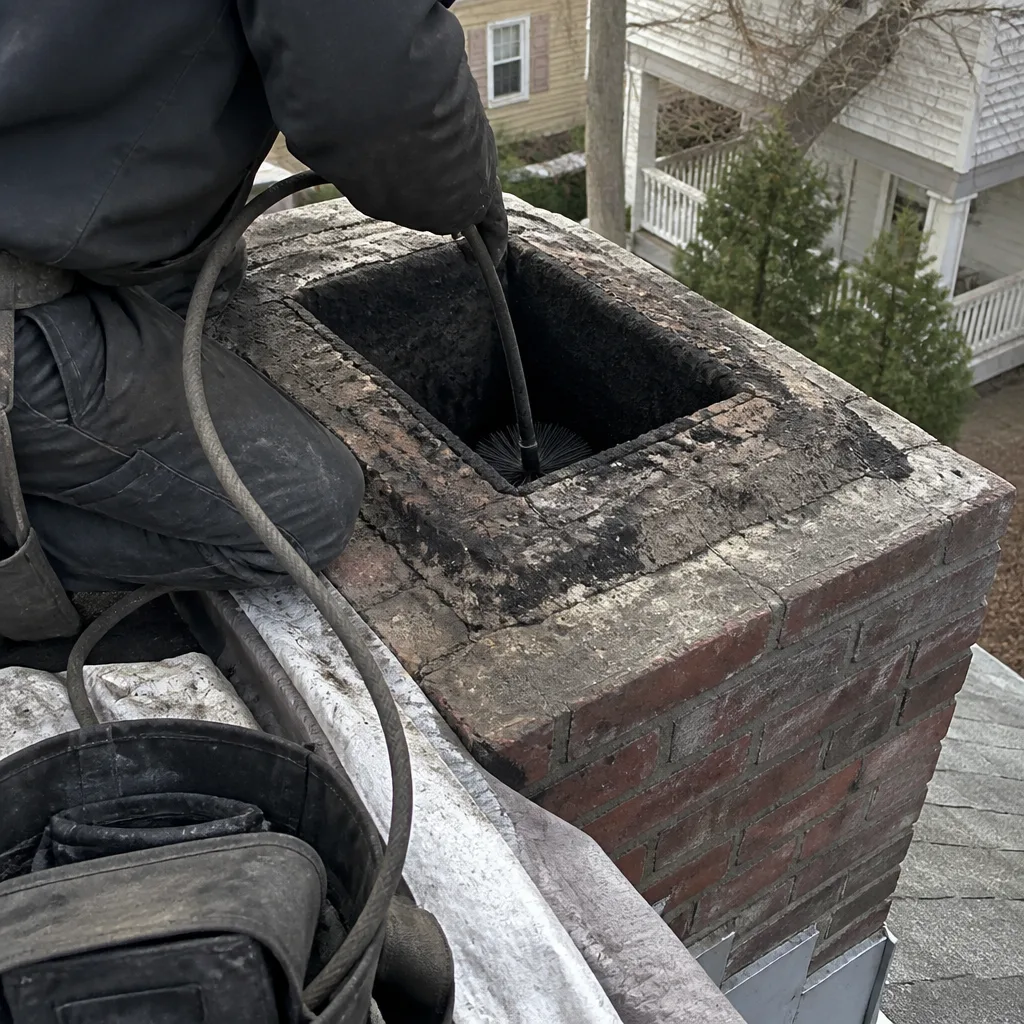 Before
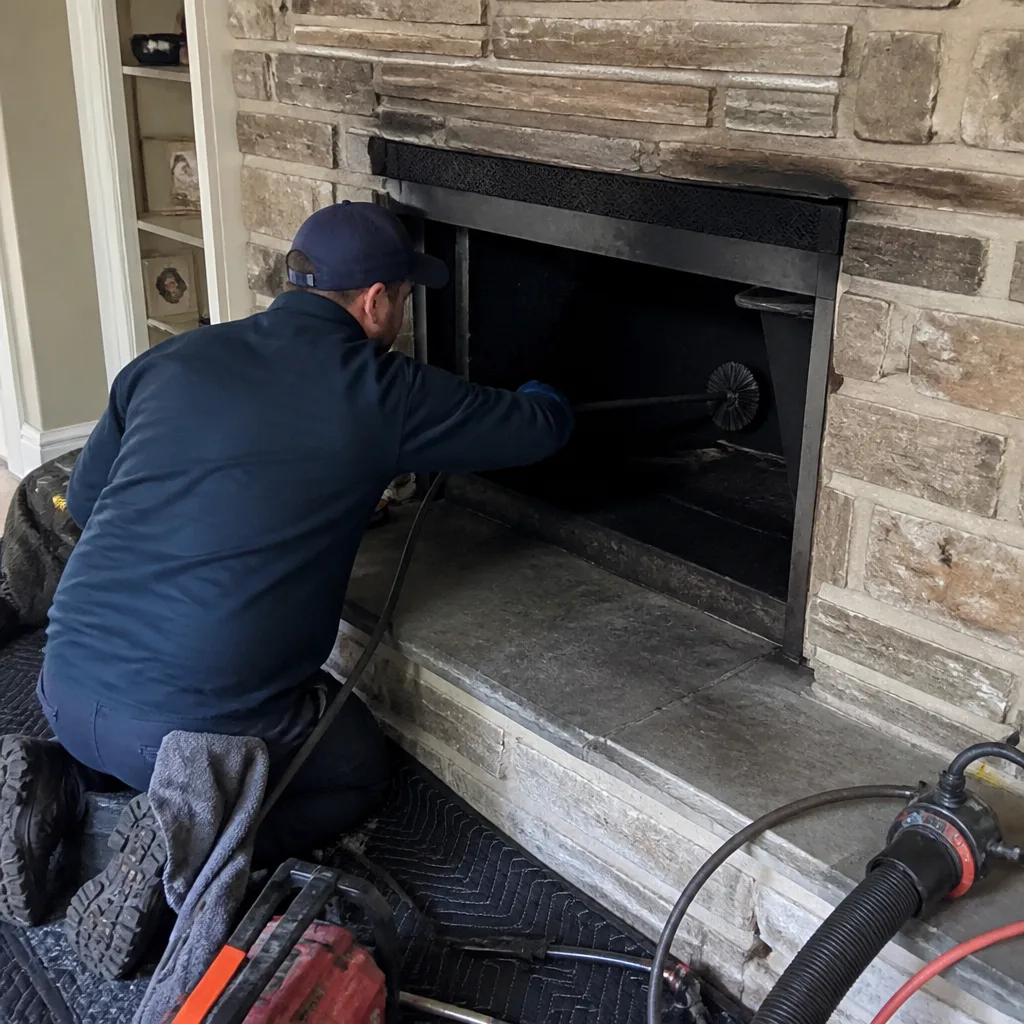 After
After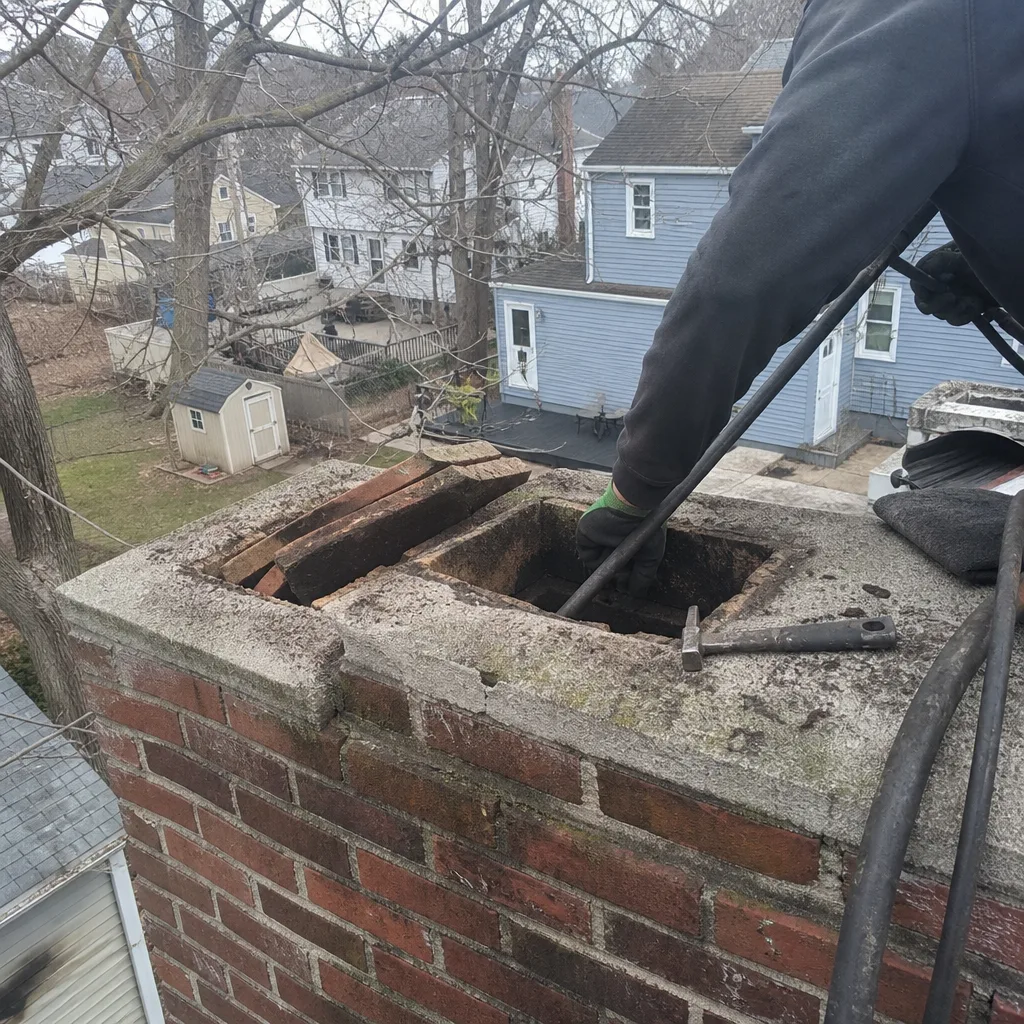 Before
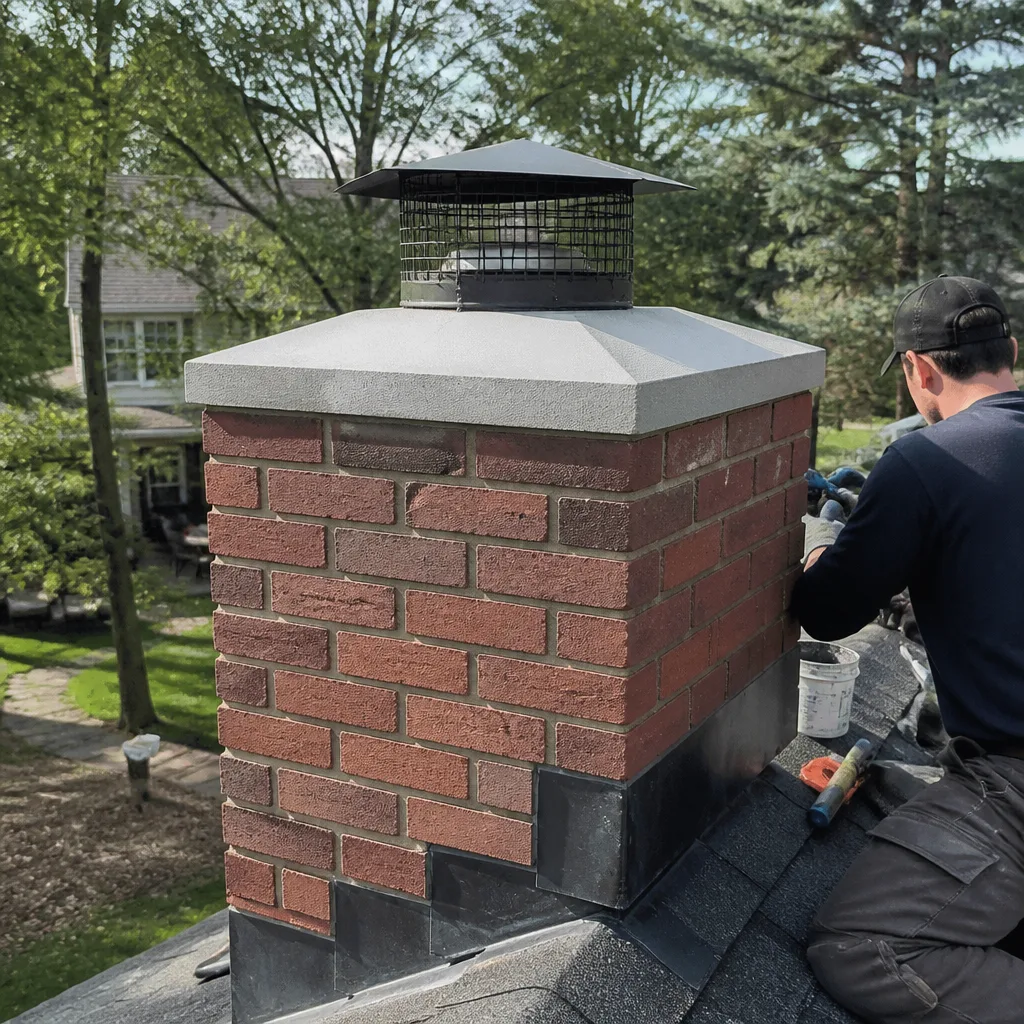 After
AfterChimney Cleaning Warning Signs: A Cambridge Homeowner’s Reference Guide
A slow, persistent campfire smell in your Cambridge living room in July - with no fire lit - is not a minor quirk. It’s a draft reversal or creosote deposit situation that a camera inspection can locate in 20 minutes. Most Cambridge homeowners miss the early warnings because they’re waiting for dramatic signals: smoke pouring into the room, visible flame, or a loud noise. The real indicators are mundane, specific, and easy to dismiss until they become expensive or dangerous. This guide maps the smell patterns, draft changes, and exterior masonry tells that signal when your chimney needs professional attention, and what a Level 2 camera inspection reveals that a flashlight look cannot.
Quick Answer
The most reliable chimney cleaning warning signs in Cambridge are: a persistent smoky or sulfurous odor (especially in summer), visible creosote flakes in the firebox, white efflorescence or spalling brick on exterior masonry, and any fireplace that “always smoked a little” but now smokes noticeably more. These symptoms indicate creosote buildup, liner deterioration, or draft system failure - all conditions that an NFPA 211 Level 2 camera inspection can diagnose and document with photographic evidence. For a deeper look at what these signs mean for your home, see The Complete Guide to Chimney Cleaning in Cambridge.
Table of Contents
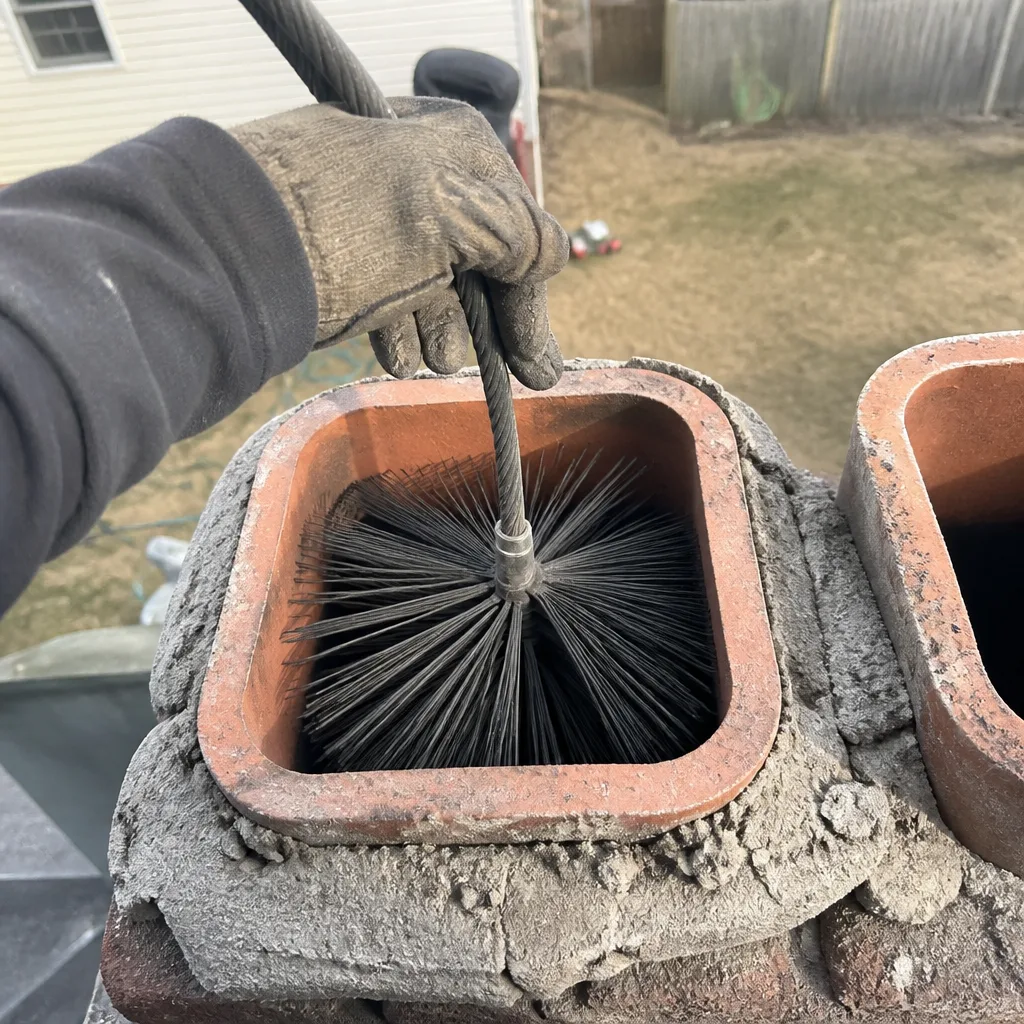
- Smell Patterns: What Your Nose Detects Before Your Eyes Do
- Exterior Masonry Warning Signs in Cambridge’s Brick and Brownstone Stock
- Draft Anomalies: When “Always Smoked a Little” Becomes a Hazard
- Interior Signs in Adjacent Rooms: The Chimney Problems Homeowners Misattribute
- What a Camera Inspection Reveals That Visual Checks Miss
- Creosote Classes and What They Mean for Cleaning Frequency
- Common Mistakes to Avoid
- When to Call a Professional
- Frequently Asked Questions
- The Bottom Line
BeforeAfterSmell Patterns: What Your Nose Detects Before Your Eyes Do
Cambridge’s tight building stock - triple-deckers in Inman Square, Victorian singles in Mid-Cambridge, postwar splits in North Cambridge - traps odors that would dissipate in draftier construction. Homeowners often live with chimney smells for months before connecting them to the flue. The specific odor matters. It tells a technician where to point the camera first.
Creosote odor smells like stale campfire or asphalt. It intensifies in humid weather, which is why Cambridge homeowners notice it most in July and August when the air is heavy off the Charles. The smell means accumulated creosote is off-gassing. Class I creosote (sooty, brushable) smells milder. Class III creosote (glazed, hardened) produces a sharper, more penetrating odor and indicates a more serious buildup that requires rotary cleaning or chemical treatment before brushing.
Sulfur or rotten-egg smell points to draft reversal pulling sewer gas, or in rare cases, a gas leak near the chimney chase. But in Cambridge’s older housing, it more often signals a blocked or partially collapsed flue liner that is venting combustion byproducts into wall cavities. This is not a cleaning issue - it’s a liner replacement scenario, and it needs immediate camera confirmation.
Musty or mildew smell suggests water intrusion through a failed crown, deteriorated flashing, or spalling brick that has opened mortar joints. Cambridge’s freeze-thaw cycles accelerate this. Water enters in January, freezes, expands, and by March the smell is established in the attic or second-floor bedroom adjacent to the chimney stack.
We documented this pattern in a 2019 Porter Square inspection: the homeowner had chased a “plumbing smell” for two months before we ran the camera and found a cracked flue liner channeling moisture into a stud bay. The smell was chimney-sourced, not sewer-sourced. Camera evidence settled the diagnostic question in fifteen minutes.
Key smell indicators to track:
- Season of onset (summer humidity vs. winter heating season)
- Room location (firebox, basement, second floor, attic)
- Correlation with weather changes (rain, high humidity, temperature drops)
- Whether the smell persists when the fireplace is not in use
Exterior Masonry Warning Signs in Cambridge’s Brick and Brownstone Stock
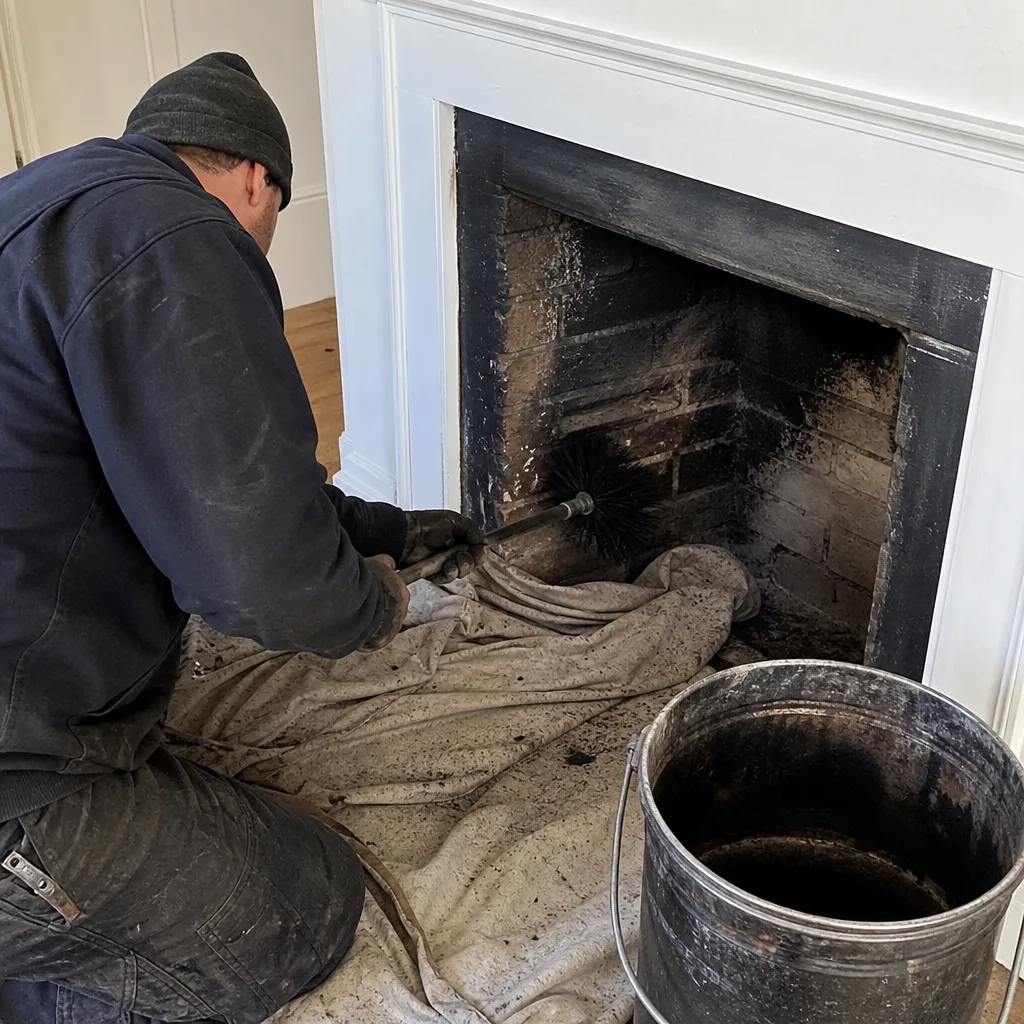
Cambridge’s building fabric is distinctive: red brick from the 1880s through 1920s, brownstone trim on higher-style Victorians, and the occasional granite foundation wall. Each material fails differently, and each failure mode has implications for the flue liner inside.
Efflorescence - the white powdery deposit on brick surfaces - is soluble salts carried out by moisture migration. In Cambridge, we see it most on north-facing chimney faces that never fully dry. Efflorescence itself is not structural damage, but it documents that water is moving through the masonry. That water is finding entry points: failed crown, open mortar joints, or deteriorated flashing. And water inside a masonry chimney accelerates liner corrosion, especially in older terracotta liners common in pre-1950 Cambridge housing.
Spalling - brick faces that flake or pop off - is more serious. It means water has frozen inside the brick matrix, expanding and fracturing the surface. Cambridge’s 90-plus freeze-thaw cycles per winter make this common on unprotected chimney tops. Spalling brick exposes the inner wythe of the chimney to further water intrusion and indicates that the crown or wash has failed. By the time spalling is visible from the ground, the liner has likely been exposed to years of moisture cycling.
Mortar recession and open joints are the earliest visible sign. Pointing mortar erodes, joints open to 3/8 inch or more, and water enters freely. In Cambridge’s Cambridgeport and Riverside neighborhoods, we’ve found 1920s brick chimneys with original lime mortar eroded to a depth of two inches. The brick looks sound, but the structure is open to weather. A Level 2 inspection checks whether that water intrusion has reached the liner.
Brownstone-specific note: Cambridge’s brownstone trim is particularly vulnerable. It’s softer than brick, more porous, and fails by granular disintegration rather than spalling. Brownstone sills and caps that are “sugaring” or crumbling need prompt replacement, or water will migrate behind them into the chimney structure.
Exterior inspection from the ground can spot these conditions, but only a camera inspection can determine if they’ve compromised the liner. We’ve replaced liners in Harvard Square properties where the exterior brick looked sound but the terracotta liner had cracked from decades of thermal shock worsened by moisture infiltration.
Draft Anomalies: When “Always Smoked a Little” Becomes a Hazard
Every Cambridge chimney sweep has heard it: “This fireplace has always smoked a little.” The statement is a diagnostic trap. A fireplace that spills smoke occasionally - during wind gusts, when first lit, with the kitchen exhaust running - may have a marginal draft system. One that smokes consistently, or that has worsened from occasional to routine, has crossed into documented hazard territory.
Normal draft behavior: brief smoke spillage for 30-60 seconds on cold startup, before the flue warms and establishes upward flow. Occasional down-drafting during high wind events.
Abnormal draft behavior requiring inspection:
- Smoke spillage that persists beyond two minutes after the fire is established. This indicates insufficient flue capacity, partial blockage, or a liner that has lost its sealed condition.
- Smoke spillage that has increased in frequency or severity compared to previous seasons. A draft system doesn’t gradually degrade for no reason. The cause is findable: creosote buildup, liner deterioration, or structural changes (new roof, new exhaust appliances) that altered pressure relationships.
- Smoke odors in upstairs rooms when the fireplace is operating. This means combustion byproducts are entering wall or floor cavities, usually through a compromised liner or missing mortar joints in the smoke chamber.
- Difficulty establishing fire or sluggish flame despite dry fuel and proper kindling. A choked flue starves the fire of oxygen.
- Carbon monoxide detector activation anywhere in the home during fireplace use. This is an immediate cessation-of-use event and emergency inspection.
Cambridge’s dense housing compounds draft problems. Row houses in Area 4 and Cambridgeport share walls and rooflines; a neighbor’s renovation that added a powered exhaust can depressurize your home enough to reverse your chimney draft. New tight windows and doors - common upgrades in Cambridge’s 2015-2025 resale market - reduce infiltration air, which can starve a fireplace of makeup air. The fireplace didn’t change. The house around it did.
A Level 2 inspection measures draft pressure and documents liner condition to distinguish between correctable problems (blockage, damper adjustment) and structural ones (liner sizing, chimney height). We don’t guess at draft diagnosis. We measure and photograph.
Interior Signs in Adjacent Rooms: The Chimney Problems Homeowners Misattribute
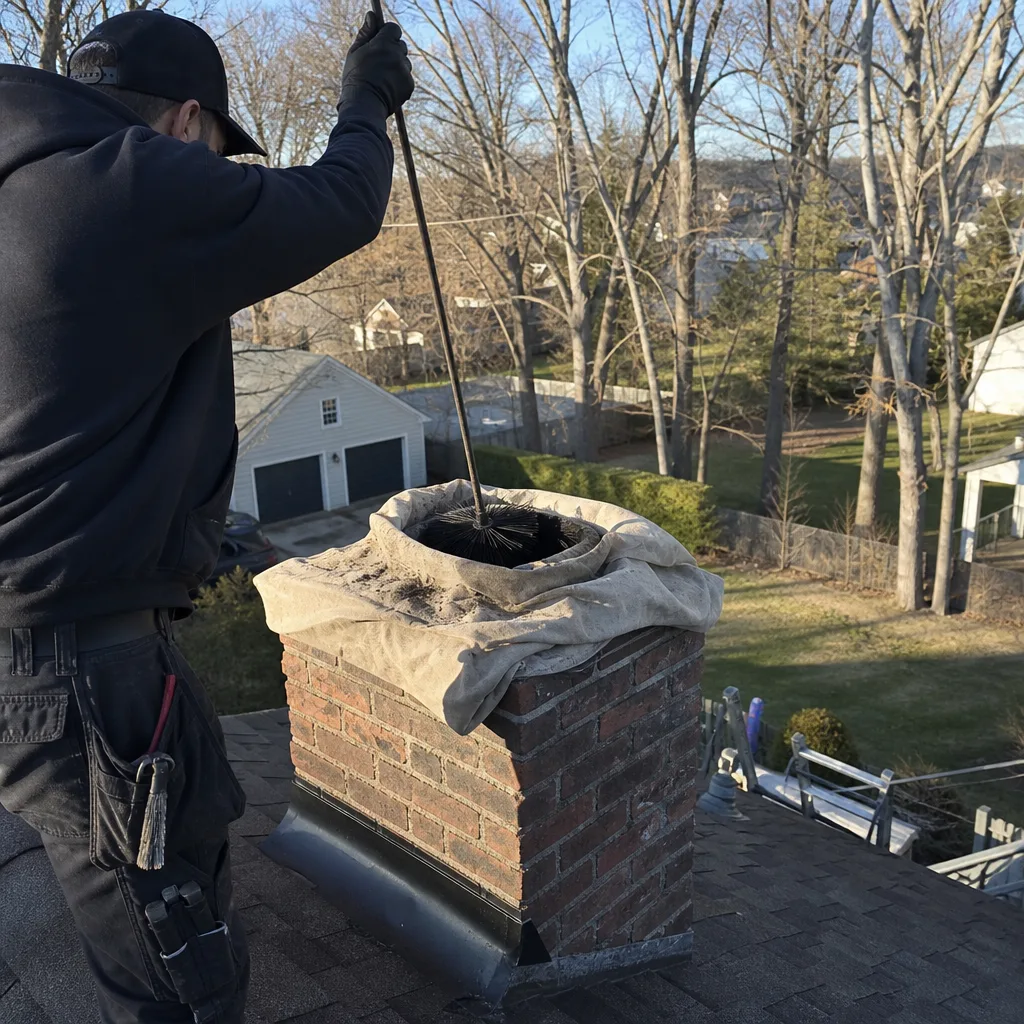
The chimney stack runs through the center of the house in much of Cambridge’s housing stock. That means chimney problems manifest in rooms that have no fireplace - and homeowners spend months chasing plumbers or roofers for answers that a camera inspection would have provided immediately.
Wall or ceiling staining on the second floor, directly adjacent to the chimney chase, is often attributed to roof leaks. But roof leaks typically follow rafter lines and appear at varying distances from the chimney. Staining that tracks the chimney profile - a rectangular stain aligned with the flue location - indicates water entering through the chimney crown or flashing and migrating down the exterior of the flue liner. The roof membrane may be sound. The chimney top is not.
Peeling paint or plaster bubbling in a first-floor room behind the fireplace wall suggests moisture migration through the smoke chamber or firebox. In Cambridge’s older housing with unlined or partially lined smoke chambers, combustion byproducts condense on the cool exterior surface and migrate through porous brick into the living space. The damage looks like a plumbing leak. The source is the chimney.
Floor staining or warping in the basement near the chimney foundation indicates water entry at the chimney base, often from exterior ground moisture wicking up through the foundation. This is common in Cambridge’s high-water-table areas near the Charles, particularly in basement-level hearths found in Inman Square and East Cambridge conversions.
Unexplained soot or dust accumulation on furniture in rooms adjacent to the chimney, even when the fireplace is not in use, suggests liner breach. Combustion particles are escaping through cracks in the liner and finding their way through wall cavities. This is a documented health hazard and requires immediate inspection.
In a 2021 inspection on Upland Road, a homeowner had replaced a second-floor bathroom vanity twice due to “water damage” before we found a cracked flue liner channeling condensation into the wall cavity. The vanity was never the problem. The chimney was. Camera evidence - photos of the liner crack and moisture mapping - redirected the repair to the correct system.
What a Camera Inspection Reveals That Visual Checks Miss
The flashlight look from the firebox - what some companies still bill as an “inspection” - sees approximately 18 inches of flue. The rest is darkness and guesswork. A Level 2 camera inspection, required by NFPA 211 for property transfer and recommended annually for active fireplaces, documents the full flue from firebox to crown.
Specific failure categories the camera catches first:
- Liner cracking and spalling: Terracotta liners crack in predictable patterns - vertical stress cracks from thermal shock, horizontal cracks from freeze-thaw, and spalling of the inner surface that reduces flue diameter. The camera measures and photographs each defect. A flashlight might catch a large crack. It misses the network of hairline fractures that precede liner failure.
- Creosote buildup patterns: Creosote does not deposit evenly. It accumulates at joints, offsets, and areas of turbulence. The camera identifies Class III glazed creosote - hard, shiny, and ignitable - that brushing alone won’t remove. This determines whether rotary cleaning, chemical treatment, or a combination is needed.
- Mortar joint deterioration between flue tiles: Missing or eroded mortar at tile joints allows combustion gases to enter wall cavities. This is invisible from below and often missed by exterior inspection. The camera finds it directly.
- Smoke chamber defects: The smoke chamber - the area above the damper that funnels smoke into the flue - is a common location for unlined construction, corbelled brick with exposed mortar, and creosote accumulation. Camera inspection with a 90-degree adapter documents conditions that affect draft and safety.
- Obstructions and animal entry: Nests, deceased animals, and debris accumulation are findable by camera even when no odor is present. We removed a squirrel nest from a Cambridge chimney in February where the homeowner had noticed only “slightly sluggish draft.”
- Water damage documentation: Staining, corrosion, and efflorescence on the liner interior document water entry points that exterior inspection can only infer.
Clause 4 of the Haven Standard requires this photo record on every job. We’ve maintained that practice since 2009, before insurers or regulators asked for it. The homeowner receives dated, labeled photographs of every significant finding, with written interpretation. No “trust us” - show us the photos.
Materials matter when repair follows inspection. For liner replacement, we specify DuraFlex stainless steel liners or HeatShield cerfractory resurfacing based on what the camera reveals. For crown repair, we use Gelco and Copperfield components sourced through Haven’s buying network. The inspection determines the specification; the specification determines the material.
Creosote Classes and What They Mean for Cleaning Frequency
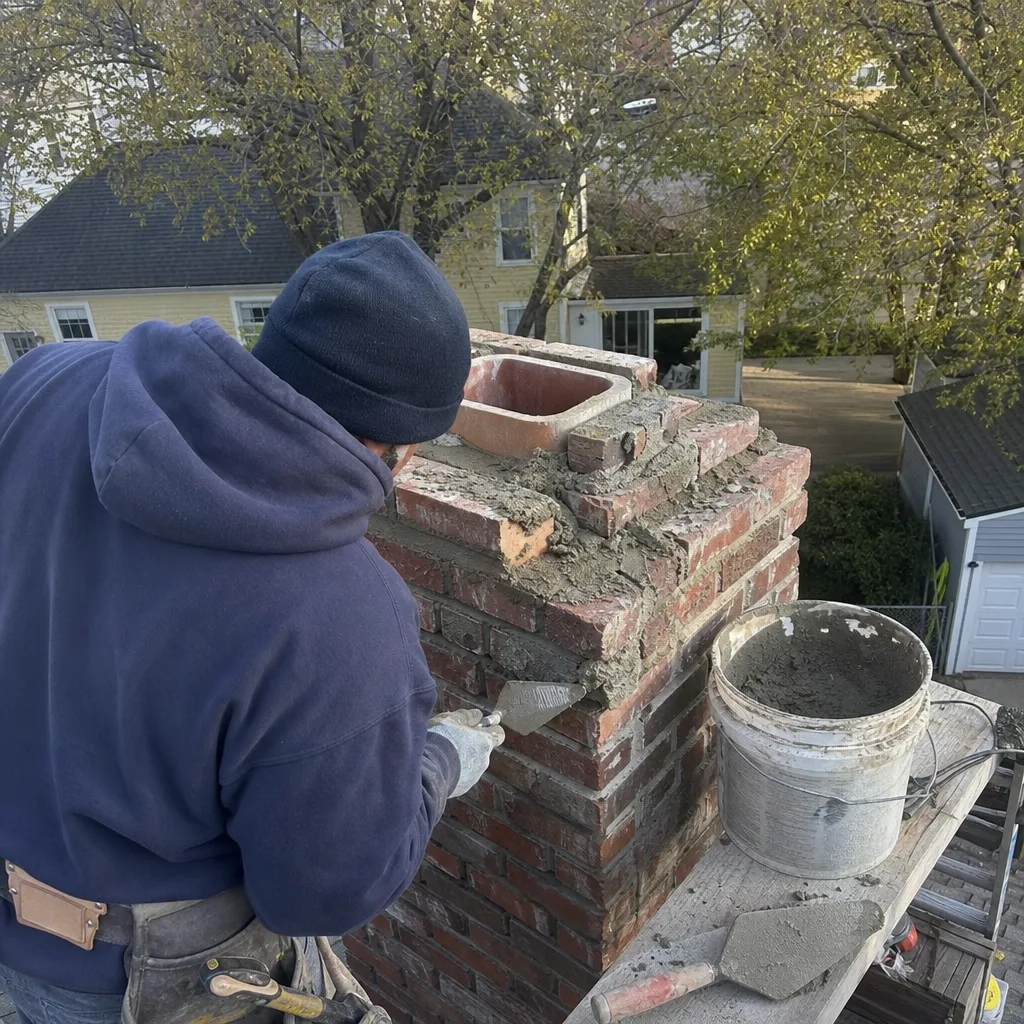
Creosote classification is not academic jargon. It determines cleaning method, cleaning frequency, and fire risk. Cambridge’s predominance of older, often oversized flues and irregular burning patterns (weekend fires, not daily heating) produces specific creosote profiles.
Class I creosote: Sooty, black, brushable. Formed from dry hardwood burned with adequate air supply. Removed with standard wire or poly brushes. In Cambridge, we see this in properties that burn seasoned oak or maple and maintain hot, active fires. Annual cleaning is sufficient.
Class II creosote: Granular or flaky, sometimes tar-like. Formed from cooler fires, wet wood, or restricted air supply. Requires more aggressive brushing, sometimes with rotary equipment. Indicates burning practice that needs correction. We see this frequently in first-time Cambridge homeowners who inherited a fireplace and are learning to operate it.
Class III creosote: Glazed, hardened, often glossy. Formed from prolonged smoldering, unseasoned wood, or closed-damper operation. Highly ignitable. Cannot be removed by brushing alone; requires rotary cleaning with chains or chemical treatment to soften before removal. This is the condition that produces chimney fires. In Cambridge, we find it most often in rental properties where tenants operate fireplaces without owner guidance, and in homes with exterior chimneys that run cold and promote condensation.
Cleaning frequency guidance for Cambridge:
- Annual fireplace use (20+ fires per season): annual Level 2 inspection and cleaning as indicated
- Occasional use (5-15 fires): inspection every two years, cleaning when Class II or III is detected
- Rare use (fewer than 5 fires): inspection before first use if the chimney has been idle, due to potential animal entry or moisture damage during dormancy
- Gas log conversion: still requires inspection - gas produces corrosive condensation and draft issues distinct from wood-burning
The inspection determines the class; the class determines the method. We don’t sell cleaning to chimneys that don’t need it, and we don’t brush Class III creosote and call the job done.
Common Mistakes to Avoid
- Assuming a gas fireplace needs no inspection. Gas produces water vapor and corrosive condensation. We’ve found deteriorated gas flue liners in Cambridge condos where owners assumed “clean burning” meant “maintenance free.”
- Attributing chimney smells to “old house character.” Persistent odor is diagnostic data, not ambiance. The specific smell pattern points to a specific failure mode that a camera can confirm.
- Accepting a flashlight inspection as sufficient. NFPA 211 defines Level 1 (visual, accessible areas) and Level 2 (camera inspection of full flue interior). For any property transaction, weather event, or change in appliance, Level 2 is the appropriate standard.
- Ignoring exterior masonry because “brick lasts forever.” Cambridge’s freeze-thaw cycles destroy mortar and spall brick in decades, not centuries. Exterior inspection from the ground, followed by camera inspection of the interior, catches problems before liner failure.
- Burning unseasoned wood or construction debris. Fresh-cut wood and pressure-treated lumber produce accelerated creosote buildup and toxic combustion byproducts. Cambridge’s tree-service wood - often offered free - is rarely seasoned adequately.
- Waiting for “the big sign” before calling. Chimney fires are often silent or mistaken for a “roaring fire.” The early warnings are subtle: smell changes, draft shifts, exterior staining. These are the signals to act on.
- Hiring based on lowest price without written scope. A “sweep” that doesn’t include camera inspection, photo documentation, and written findings is not comparable to one that does. Clause 1 of the Haven Standard requires written price, written scope, and written warranty before work starts - not after the technician is in your home.
When to Call a Professional
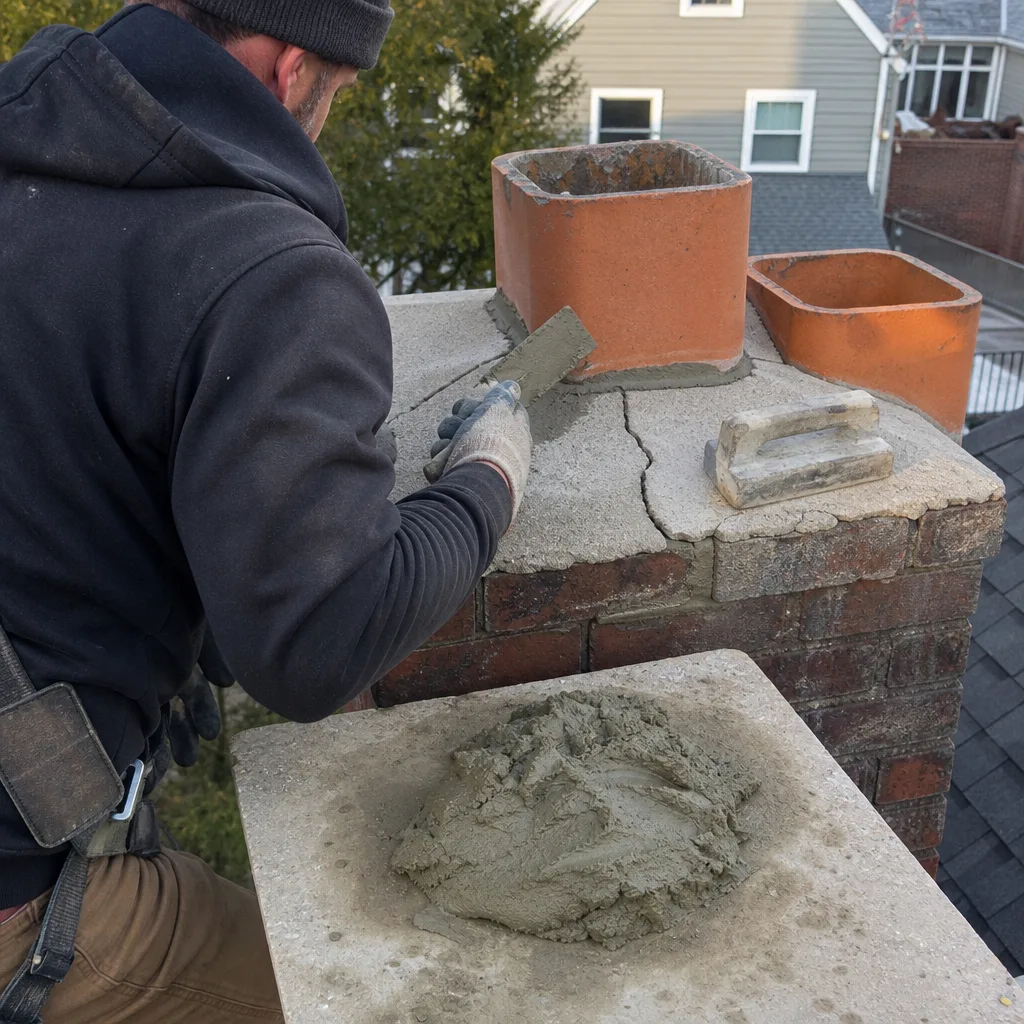
Call for a Level 2 inspection when you detect any persistent odor from the fireplace or chimney area, when draft behavior changes, when exterior masonry shows efflorescence or spalling, or when any adjacent room shows unexplained moisture or staining. Not sure who to trust? Read How to Hire a Chimney Cleaning Contractor in Cambridge: A Step-by-Step Guide first. Call immediately if a carbon monoxide detector activates during fireplace use.
Level Two Chimney Cambridge offers free estimates in Cambridge - call (857) 309-1908. Every estimate includes a written price, written scope, and written warranty before any work begins. Our background-checked, uniformed technicians arrive with license information, a named assignment, and a text notification when en route. Calls are answered by a live person, 24 hours a day, 7 days a week.
We’ve completed more than 38,000 chimney inspections and cleanings since 2009, every one with a written price before work started and a documented photo record when done. The 365-Day Done Right Promise applies to every job: if it’s not done right, we make it right. And we offer a Free Second Opinion on any competitor’s written estimate - bring us their quote, and we’ll review it against what our camera finds.
Frequently Asked Questions
A Level 2 chimney inspection and cleaning in Cambridge typically ranges from $285 to $425, depending on creosote class, accessibility, and whether rotary equipment or chemical treatment is needed for Class III buildup. We deliver a written price before any work starts - no exceptions, no surprises. Call (857) 309-1908 for an exact quote; estimates are free.
You need a new liner only if camera inspection documents cracks, gaps, or deterioration that compromise the flue’s ability to contain combustion byproducts. We don’t recommend liner replacement without photo evidence you can see for yourself. In many Cambridge properties, HeatShield cerfractory resurfacing or a DuraFlex stainless steel liner is the appropriate specification, determined by what the camera reveals. If a competitor is recommending liner work, our Free Second Opinion will verify whether it’s necessary.
Active fireplaces burning wood should be inspected annually and cleaned when Class II or III creosote is detected. Occasional-use fireplaces can be inspected every two years. Gas fireplaces require inspection too - not for creosote, but for corrosive condensation and draft integrity. Cambridge’s older housing stock and freeze-thaw climate make annual inspection the safer default.
Skipped cleaning allows creosote accumulation to progress from Class I (brushable) to Class III (glazed, ignitable). Chimney fires - rapid combustion of creosote deposits - can reach 2,000°F and crack liners, damage masonry, or ignite adjacent framing. Even without fire, deteriorated liners can leak combustion byproducts including carbon monoxide into living spaces. The risk is cumulative and largely invisible until inspection. Call (857) 309-1908 to schedule; estimates are free.
Summer smoke odor in Cambridge typically indicates draft reversal - warm, humid outside air sinking down the flue and activating creosote deposits - or active creosote off-gassing from Class III buildup. Both conditions are diagnosable by camera inspection. The smell is not “just old house”; it’s a specific mechanical condition with a specific remedy.
Homeowners can check exterior masonry from the ground and note odor or draft changes. But flue liner condition, smoke chamber integrity, and creosote classification require specialized camera equipment and training. NFPA 211 Level 2 inspection is the documented standard for a reason. For safety-critical components involving combustion and structural integrity, professional inspection with photo documentation is the appropriate standard. Explore more guides & resources to keep your chimney system safe year-round.
The Bottom Line
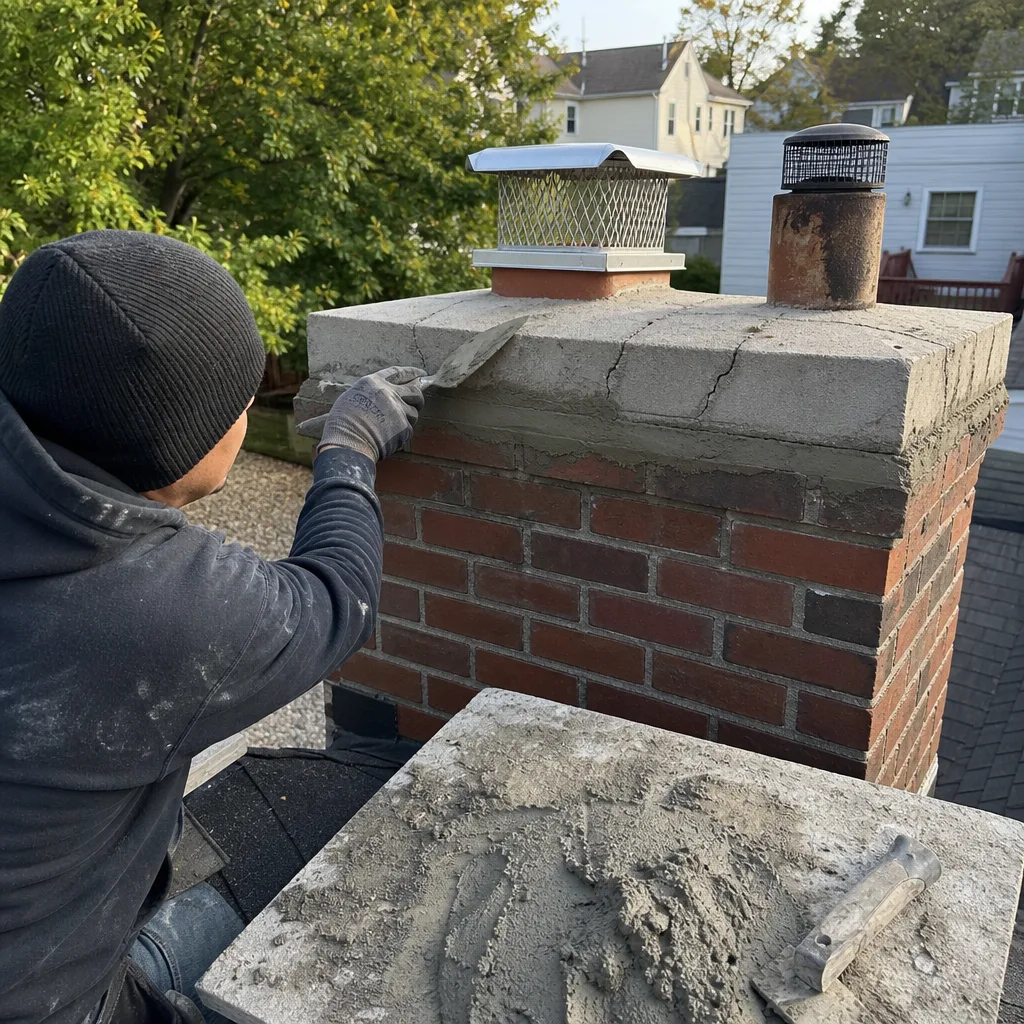
Cambridge chimney problems announce themselves early, but they do it subtly - through smell patterns, draft shifts, and exterior masonry changes that are easy to normalize until they become dangerous or expensive. The homeowner who tracks these signals and responds with documented inspection, not delayed hope, avoids the emergency repair and the unverified sales pitch. A Level 2 camera inspection with photo record, written price, and written scope is the tool that turns uncertainty into actionable fact. We’ve applied that standard since 2009, across 38,000 chimneys, because evidence outperforms reassurance every time.
Written by Corrine Halstead, Owner at Level Two Chimney Cambridge, serving Cambridge since 2009.