
Last updated September 22, 2026
Level 1 sweep and inspection to the NFPA 211 annual standard - flue, crown, cap, and flashing checked and photographed
Chimney sweep logs do not sweep chimneys. They loosen some creosote - which then falls where a brush and vacuum still have to collect it.
Gas fireplace service
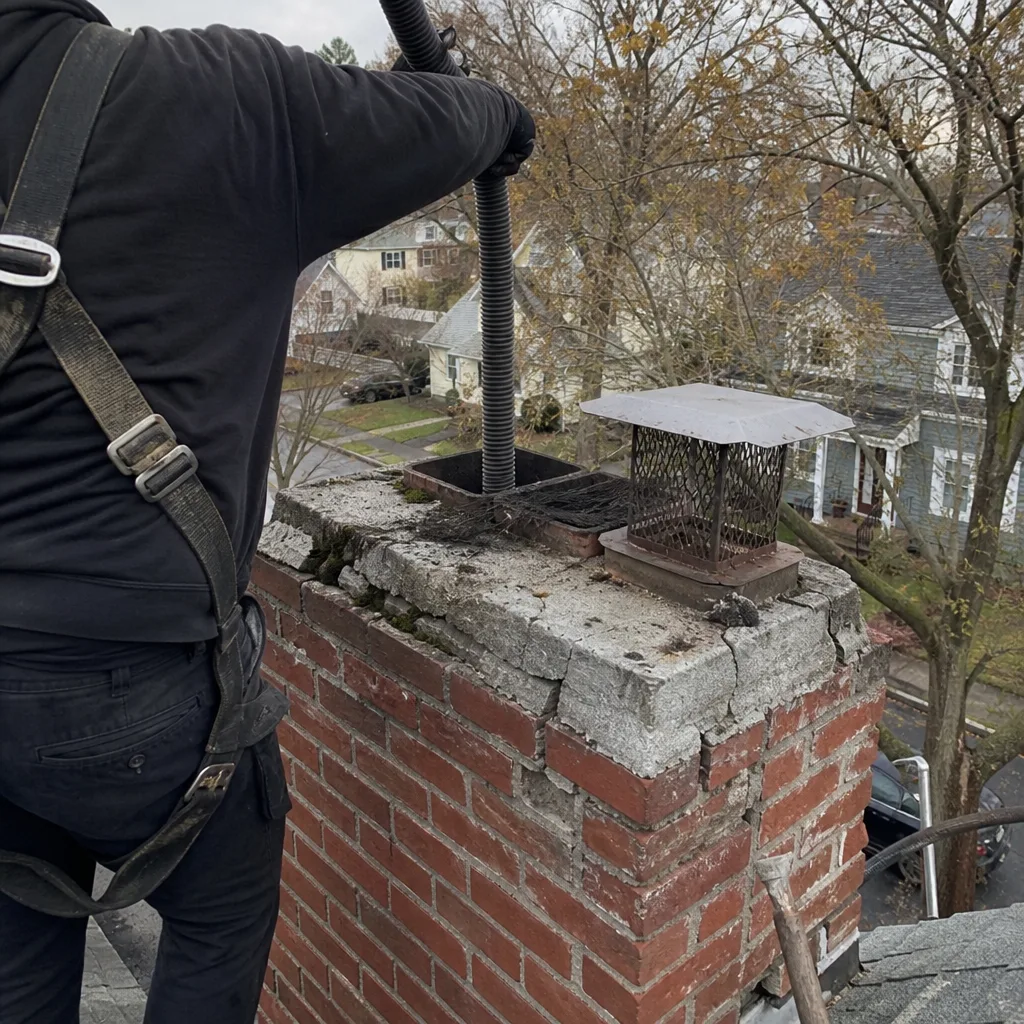 Before
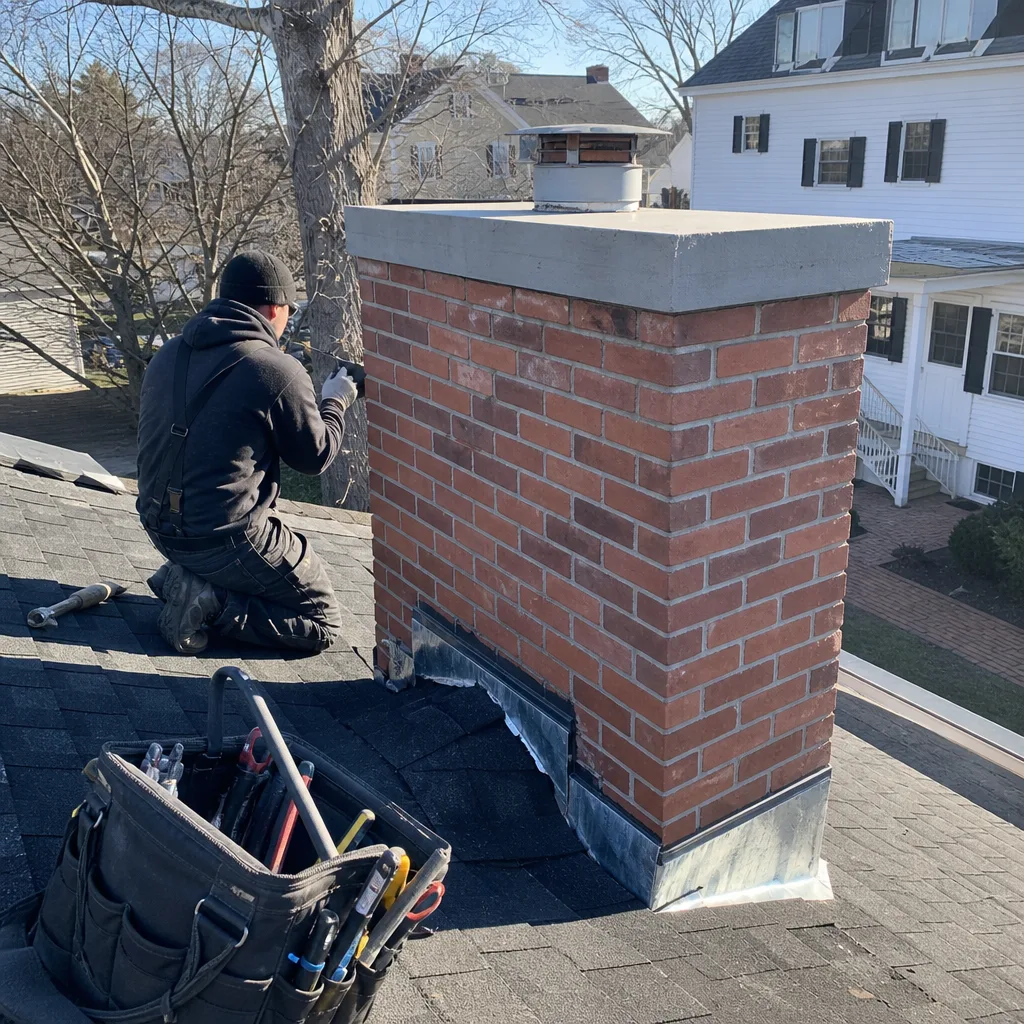 After
After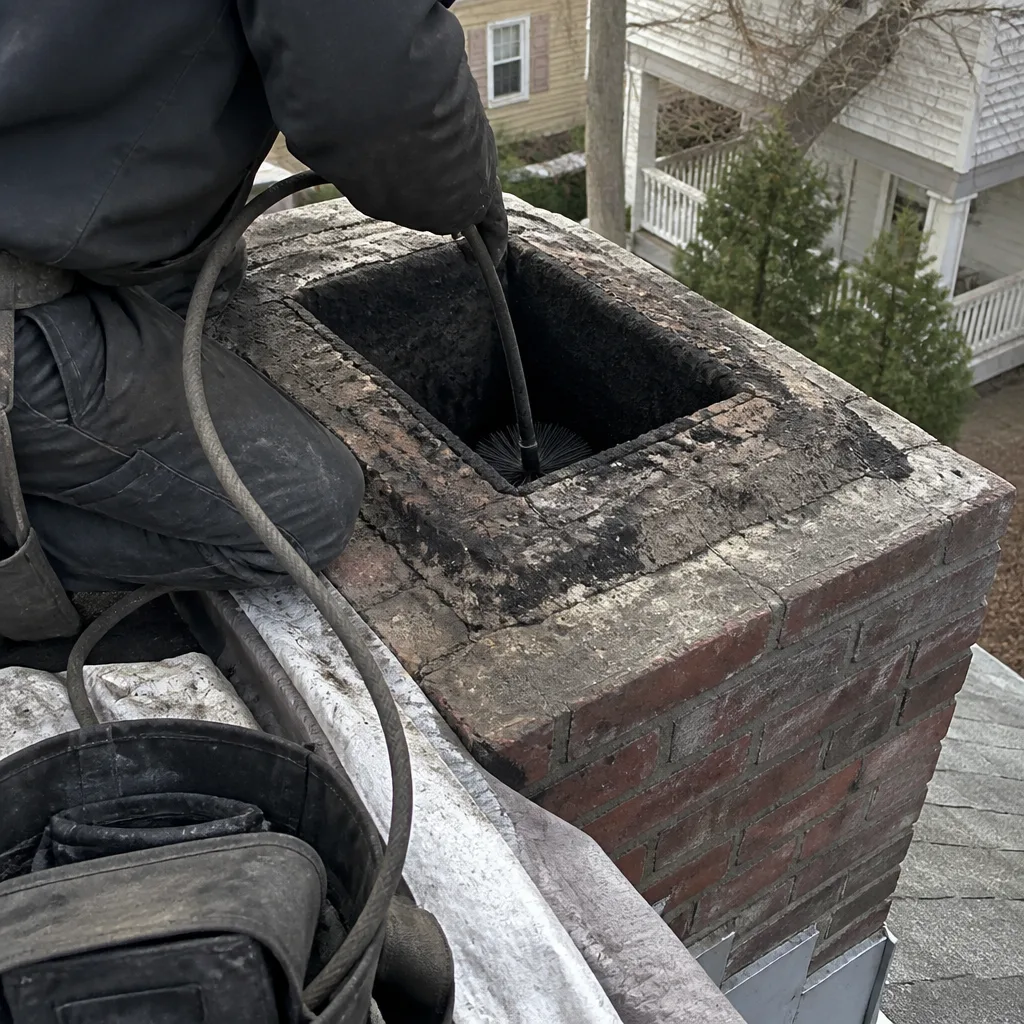 Before
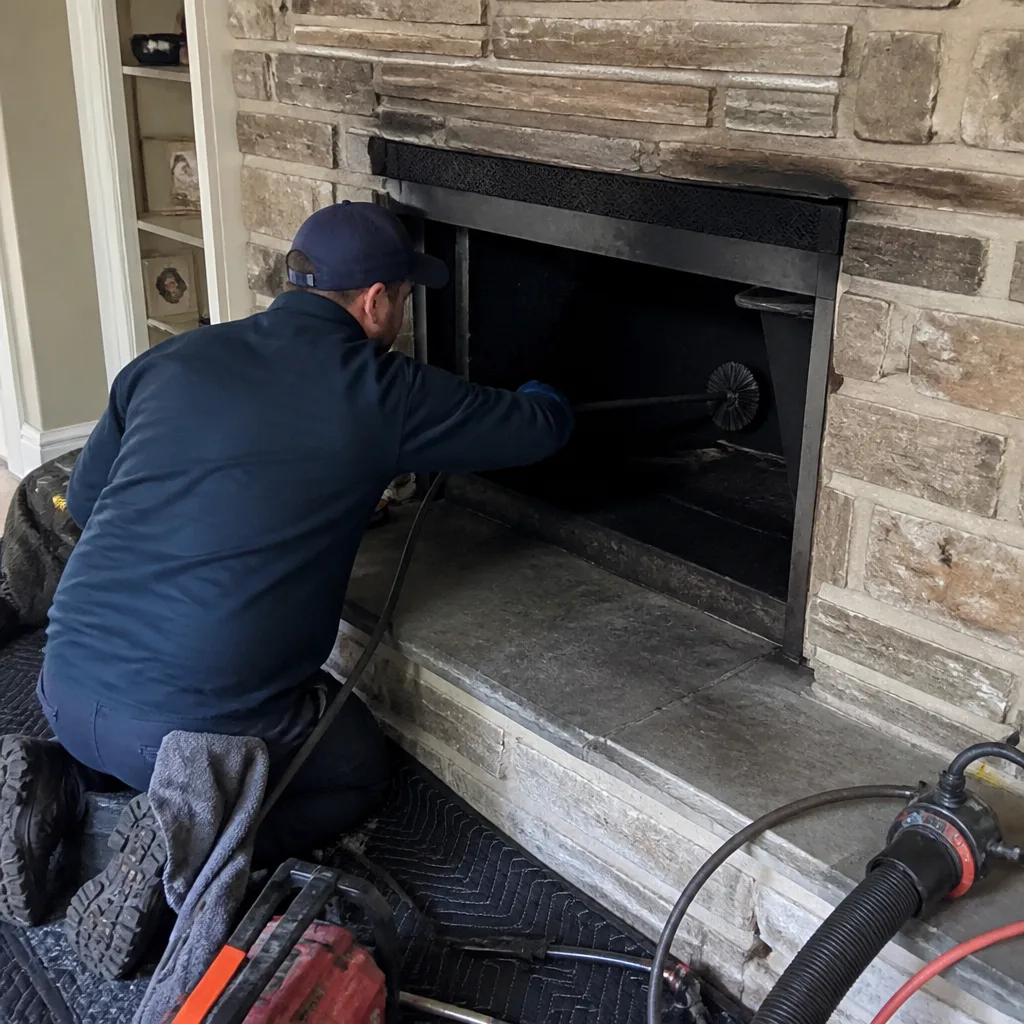 After
After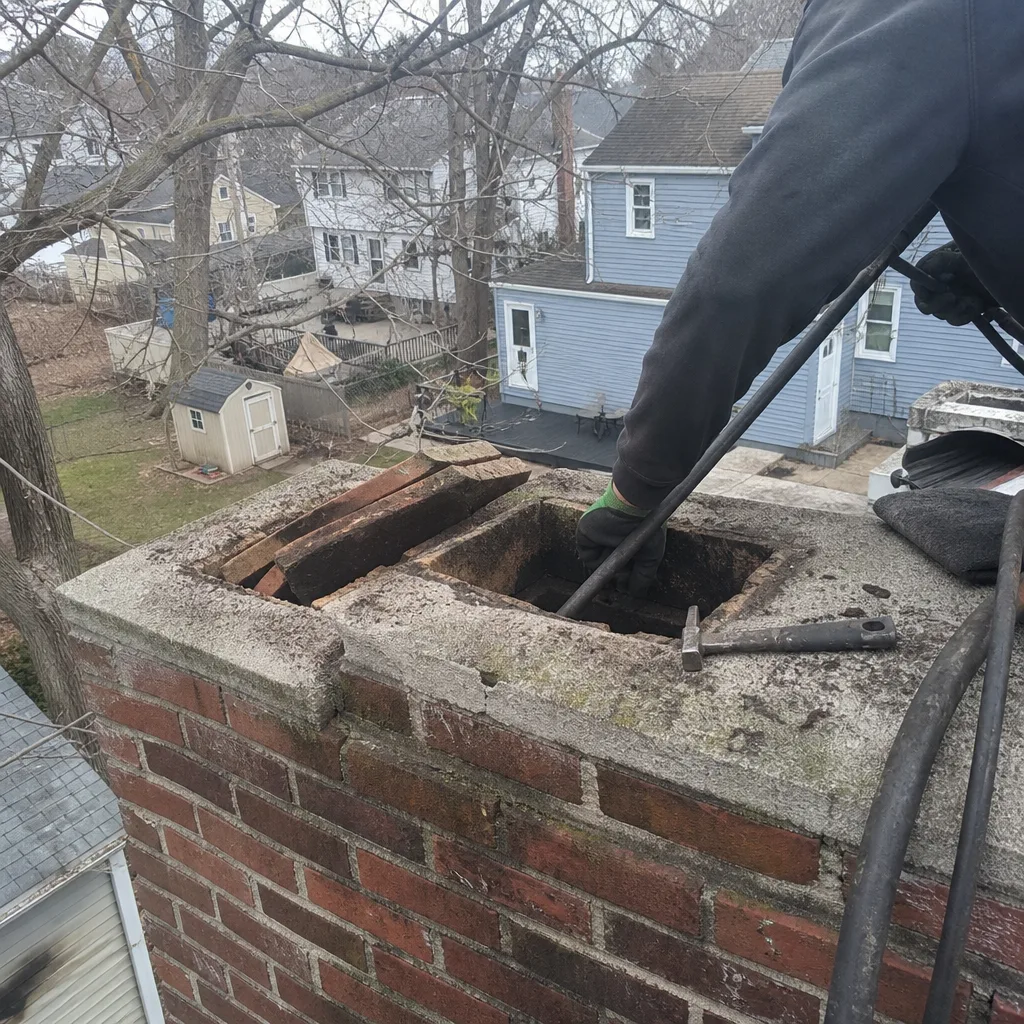 Before
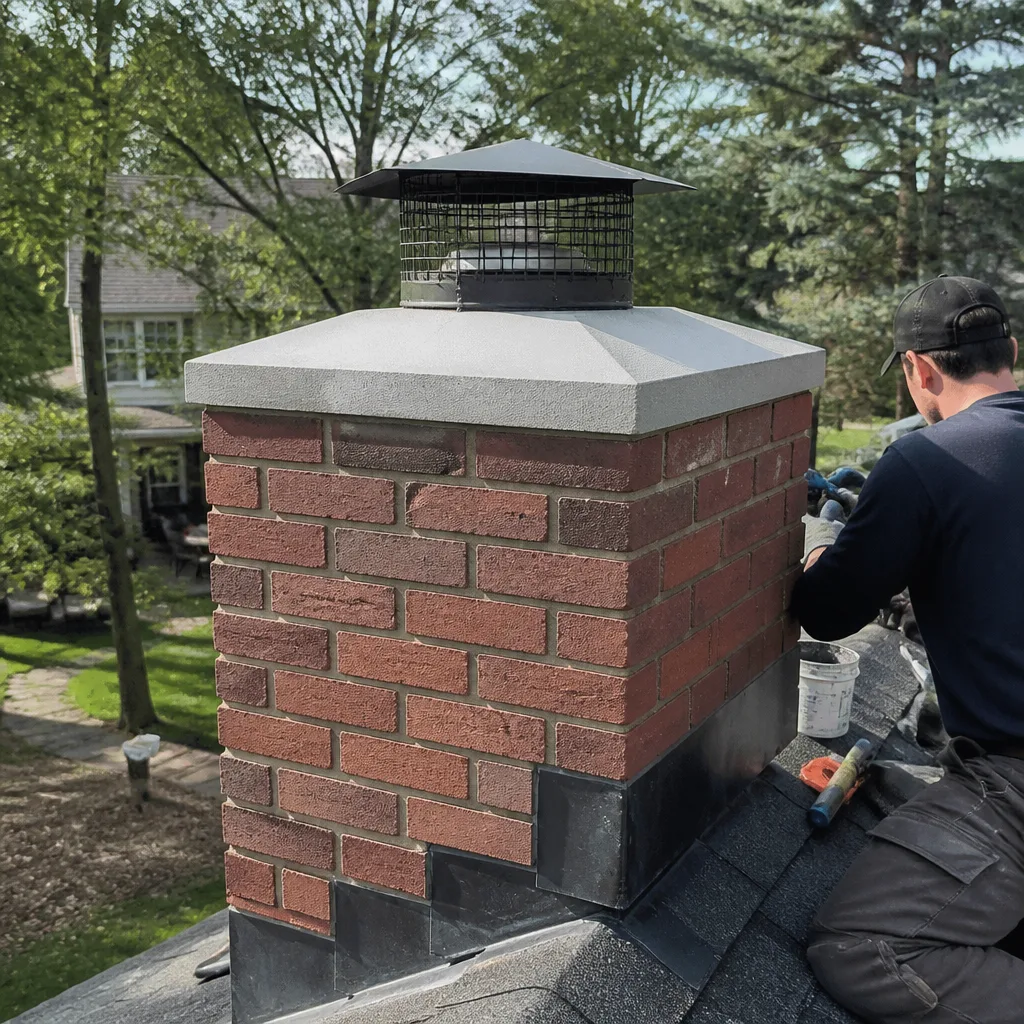 After
AfterDIY vs Professional Chimney Cleaning: The Cambridge Homeowner’s Decision Guide
A Cambridge homeowner with a brush, a drop cloth, and a YouTube tutorial can remove surface soot. What they cannot do is tell the difference between a hairline crack in a clay tile liner and a clean flue - and that difference is where house fires start. In this guide, we’ll walk through exactly what DIY chimney cleaning accomplishes in Cambridge’s stock of triple-deckers, pre-war colonials, and converted multifamily buildings, what it cannot detect, and how to decide whether the savings are real or just deferred risk. For related guidance, see our How to Hire a Chimney Cleaning Contractor in Cambridge: A Step-by-Step Guide. You’ll learn what a proper NFPA 211 Level 2 inspection reveals that no brush can reach, what Massachusetts insurance adjusters actually ask after a chimney fire, and what you can safely handle yourself between professional visits without creating a false sense of security.
Quick Answer
DIY chimney cleaning in Cambridge removes loose soot and surface debris but cannot inspect, document, or certify the condition of your flue liner, smoke chamber, or chimney crown. For Cambridge’s pre-1940 housing stock with clay tile liners and shared flues, professional cleaning with a camera-scan inspection is the only method that satisfies NFPA 211 standards, Massachusetts fire code documentation requirements, and most homeowner insurance policies. Between professional visits, homeowners can perform visual cap checks, firebox inspections, and draft tests - but these supplement, never replace, documented interior flue evaluation.
Table of Contents
- What DIY Chimney Cleaning Actually Accomplishes
- Cambridge-Specific Factors That Complicate DIY
- What Professional Chimney Cleaning Includes in Cambridge
- The Camera Log: Why Documentation Beats Assumption
- Insurance, Liability, and the DIY Cleaning Record
- What Homeowners Can Safely Do Between Professional Visits
- How to Spot a Professional Cleaning vs. a Brush Job
- Cost Comparison: DIY vs. Professional in Cambridge
BeforeAfterWhat DIY Chimney Cleaning Actually Accomplishes
Let’s be direct about what happens when a homeowner cleans their own chimney. With a poly brush, extension rods, a shop vacuum with HEPA filtration, and proper personal protective equipment, you can remove Stage 1 (soot) and some Stage 2 (granular) creosote from the flue walls. This is not nothing. In a well-maintained, relatively new system burning properly seasoned hardwood, annual DIY brushing can reduce buildup between professional inspections.
But here’s where the honest accounting starts. DIY cleaning reaches only what the brush contacts. In Cambridge’s typical 1920s colonial with an 8×12 clay flue tile liner, that brush rides the liner walls and misses:
- The smoke chamber, the funnel-shaped area above the firebox that channels smoke into the flue - a common collection point for highly combustible glazed creosote that brushes cannot reach
- Tile joint gaps and mortar erosion, where gaps as small as 1/16 inch allow flue gases to reach combustible framing
- Spalling or cracked flue tiles, especially in the upper third of the chimney where freeze-thaw cycles in Cambridge’s climate cause the most damage
- The chimney crown and wash, where water intrusion begins the deterioration that destroys liners from the outside
- Class III creosote, a tar-like, baked-on deposit that requires rotary mechanical removal or chemical treatment - brushing alone hardens it further
The failure modes are specific and serious. In 2019, we inspected a chimney in the Riverside neighborhood where the homeowner had brushed annually for eight years. The flue looked clean. Our camera found a complete circumferential crack in the third tile from the top, hidden behind a thin layer of soot that the brush had polished smooth. The crack had opened enough to allow flue gases to pyrolyze the adjacent roof framing. The homeowner’s diligent cleaning had actually masked the problem by presenting a visually clean surface.
DIY cleaning also lacks documentation. No timestamped photo record. No written condition assessment. No baseline for year-over-year comparison. When we return to a Cambridge home we’ve serviced before, we pull the prior year’s images and compare liner wall conditions, crown crack propagation, and creosote accumulation rates. That longitudinal record catches deterioration in its early stages. A homeowner with a brush has only memory, and memory is not admissible evidence.
Cambridge-Specific Factors That Complicate DIY
Cambridge’s housing stock and regulatory environment push the DIY calculus toward professional service more aggressively than in newer suburbs. These are not abstract considerations. They determine whether your cleaning effort is prudent maintenance or dangerous complacency.
Triple-Decker and Multi-Story Construction
Cambridge’s iconic triple-deckers and four-story apartment conversions mean chimney systems often serve multiple heating appliances across stacked units. A DIY cleaner working from the roof of a 40-foot Cambridge triple-decker faces genuine fall hazard, but the greater risk is flue configuration. Shared flues, offset flues (common in Cambridge’s 1880s-1920s construction), and multiple appliance connections create turbulence zones where creosote deposits unevenly. Brushing a straight run is straightforward. Navigating an offset that drops 18 inches and turns 15 degrees requires specialized flexible equipment and camera guidance that homeowners simply do not own.
Pre-War Clay Tile Liners
Most Cambridge homes built before 1940 have unlined brick chimneys or clay tile liners installed between 1900 and 1935. These liners were manufactured to less exacting standards than modern DuraFlex or Olympia Chimney products. The tiles are often 5/8-inch thick, porous, and prone to thermal shock cracking. In Cambridge’s climate, with temperature swings from 0°F to 95°F and significant humidity variation, these liners deteriorate predictably. A homeowner brushing aggressively can crack a compromised tile without knowing it. We’ve found fractured tiles in Inman Square, Mid-Cambridge, and North Cambridge where the damage pattern suggests overly stiff brushing on aged, porous clay.
Freeze-Thaw and Water Intrusion
Cambridge averages 48 inches of precipitation annually, with repeated freeze-thaw cycles from November through March. Water enters through crown cracks, deteriorated flashing, or missing caps, then freezes and expands. This spalling damage - flaking and crumbling of the liner surface - creates rough areas that trap creosote and accelerate buildup. A DIY brush cannot distinguish between normal surface roughness and active spalling that requires liner repair or replacement with a stainless steel system from DuraFlex or Copperfield.
Cambridge Fire Department and Inspection Requirements
The Cambridge Fire Department enforces Massachusetts fire code provisions that reference NFPA 211 standards for chimney maintenance. While the code does not explicitly prohibit DIY cleaning, it requires that chimney systems be “inspected and maintained in accordance with manufacturer’s instructions and NFPA 211.” For the pre-1940 systems that dominate Cambridge, no manufacturer exists, and NFPA 211 specifies Level 2 inspection (camera scan) upon property sale, after chimney fire, or when fuel type changes. The practical effect: a DIY cleaning record without documented inspection does not satisfy code requirements for real estate transactions or insurance compliance.
Neighborhood-Specific Construction Patterns
In our experience across Cambridge neighborhoods, certain patterns repeat:
- Harvard Square / Mid-Cambridge: 1890s-1910s conversions with original coal-burning flues retrofitted for gas or oil; often unlined or poorly lined, with dangerous oversizing
- North Cambridge: 1920s-1940s single-family and two-family homes with clay tile liners approaching end of service life; heavy reliance on wood stoves for supplemental heat accelerates creosote
- Cambridgeport / Riverside: Tight lot lines mean chimneys often serve as party walls; lateral cracks from differential settlement are common and invisible from below
- West Cambridge / Brattle: Larger homes with multiple fireplaces; complex flue networks that confuse even some professionals without camera verification
What Professional Chimney Cleaning Includes in Cambridge
A professional chimney cleaning in Cambridge, performed to the standard we apply at Chimney Cleaning & Sweep in Cambridge, follows a specific protocol. Understanding this protocol helps homeowners evaluate whether a quoted service is genuinely professional or just a more expensive brush job.
- Pre-service documentation: We photograph the exterior crown, cap, flashing, and visible flue opening before touching anything. This establishes baseline condition and protects both parties.
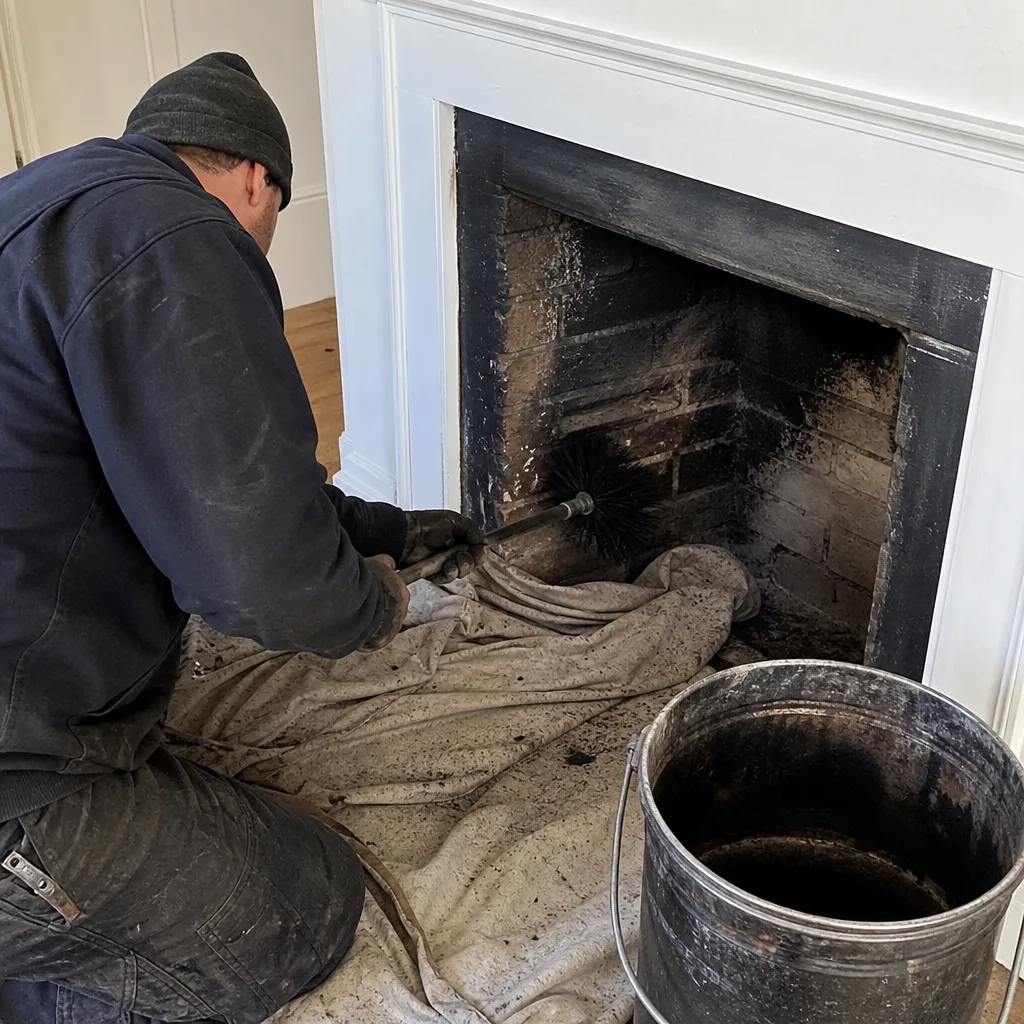
- Interior setup: Drop cloths, HEPA-contained vacuum, and protective sheeting for floors and furnishings. Cambridge’s older homes often have irreplaceable hardwood floors and detailed millwork that demand careful protection.
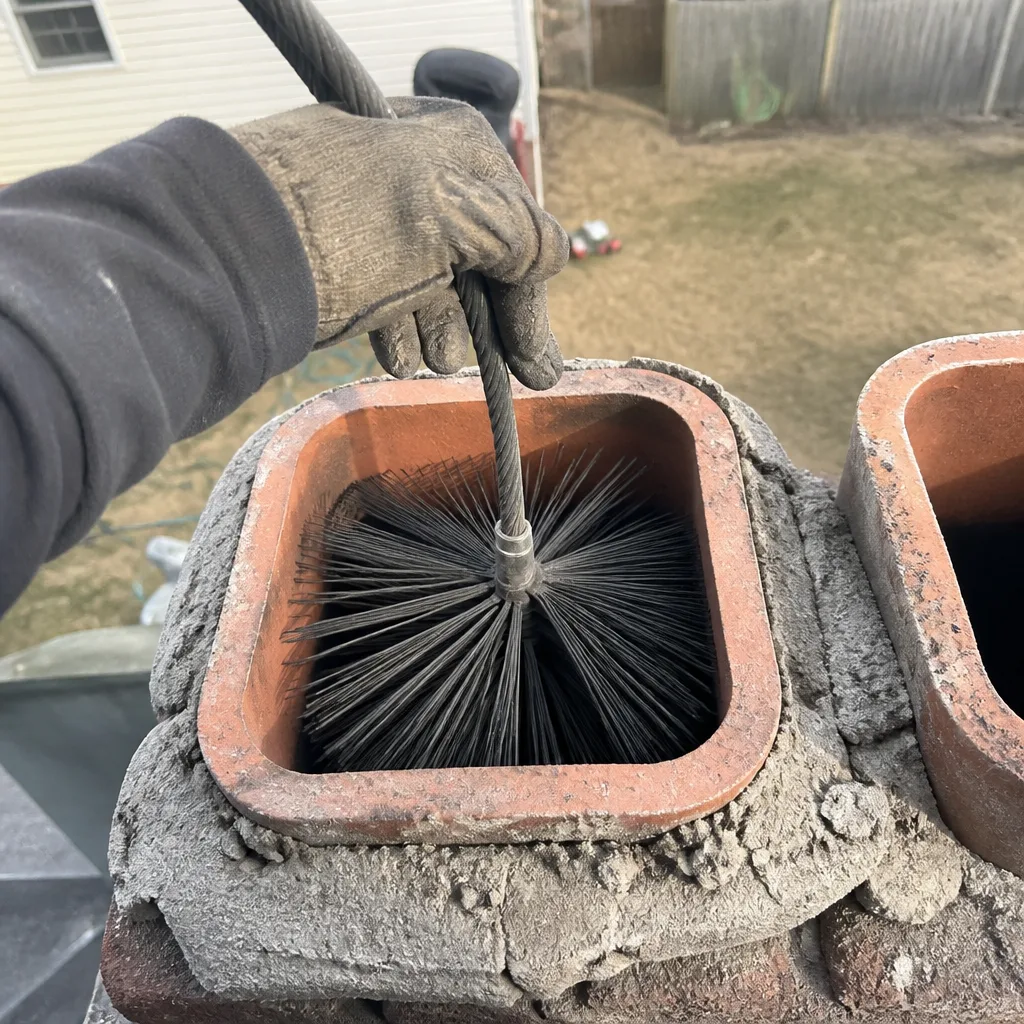
- Chimney sweep: Rotary or manual brushing of the flue, appropriate to liner type and creosote class. For Class III glazed creosote, we apply HeatShield or Gelco chemical treatments that break down the deposit before mechanical removal.
- Smoke chamber cleaning: Hand cleaning of the smoke chamber and smoke shelf, areas no homeowner brush reaches. This is where the most dangerous accumulations often hide.
- NFPA 211 Level 2 inspection with camera: A high-resolution camera is run the full length of the flue, with the technician narrating findings in real time. The homeowner sees what we see. We document every joint, every tile, every anomaly with timestamped images.
- Firebox and damper inspection: Visual and tactile assessment of firebox refractory panels, damper operation, and throat seal.
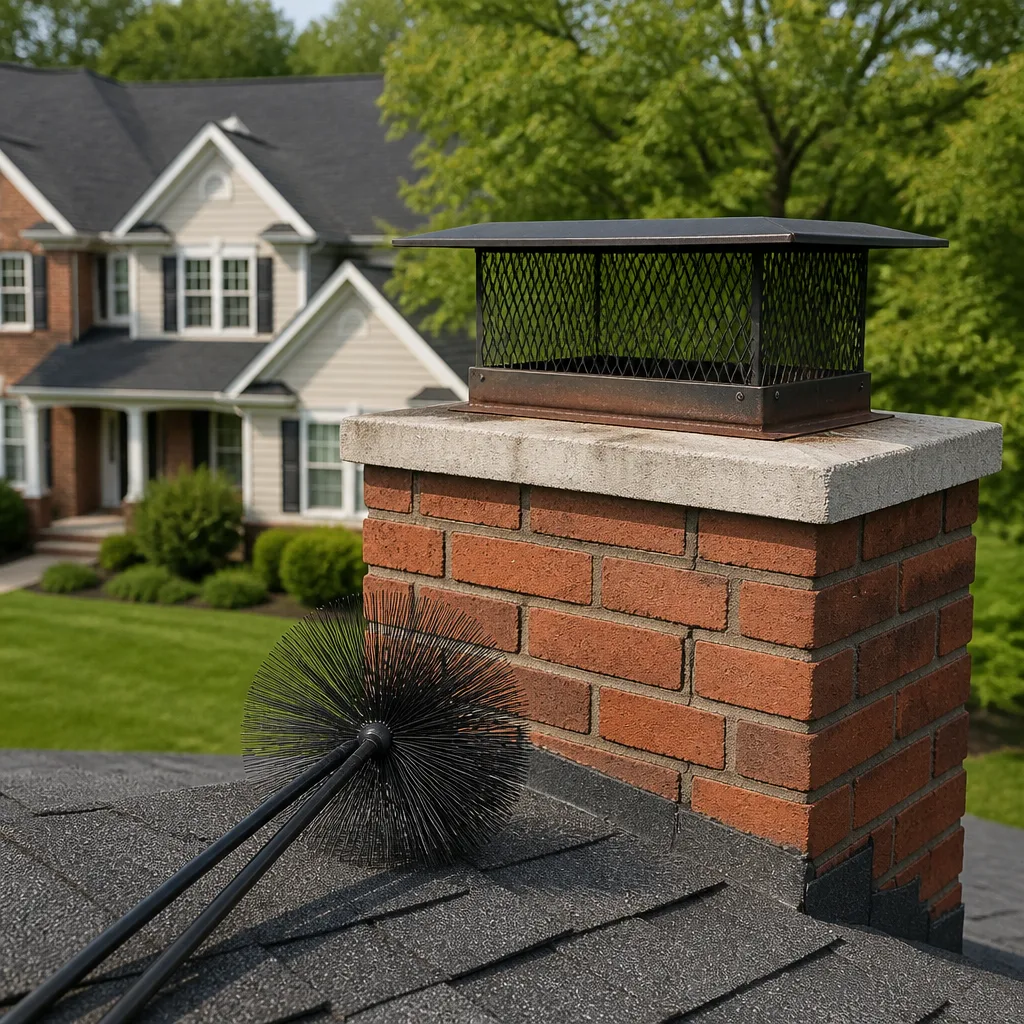
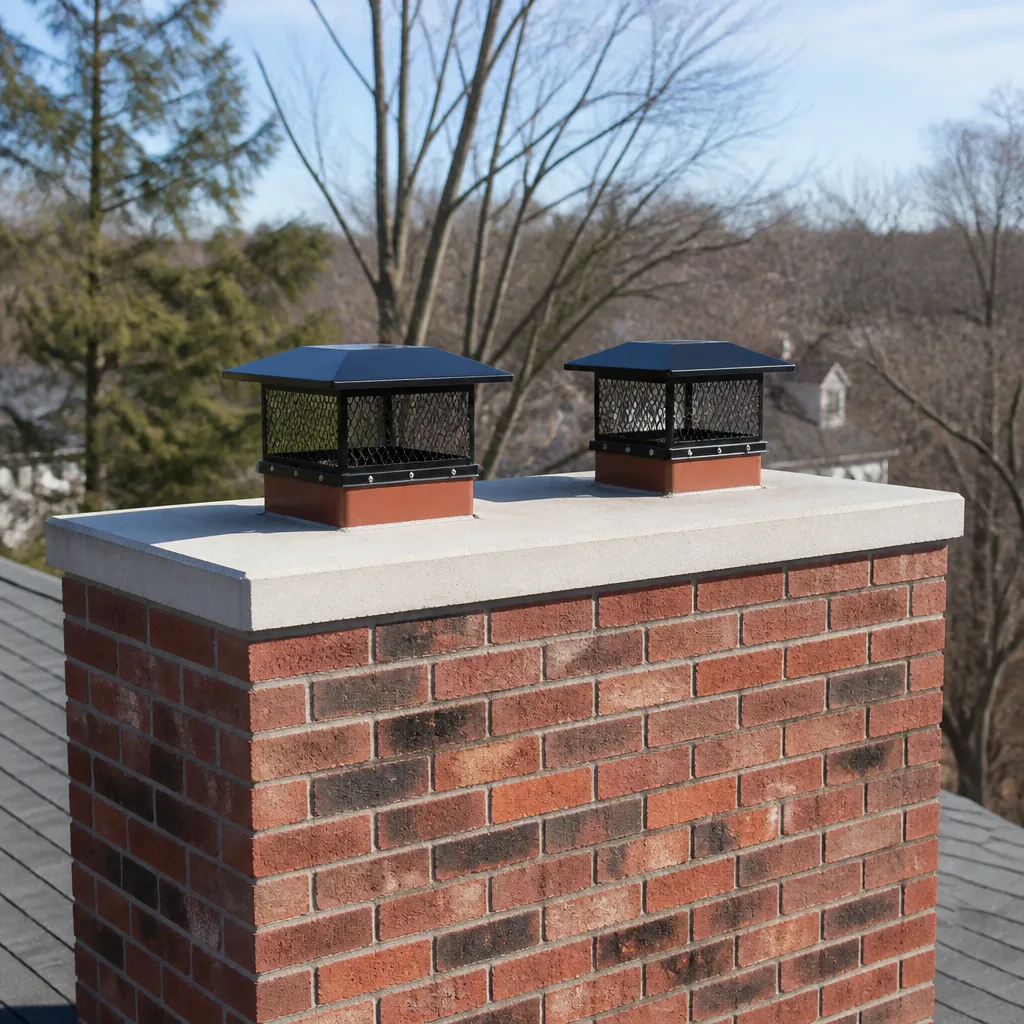
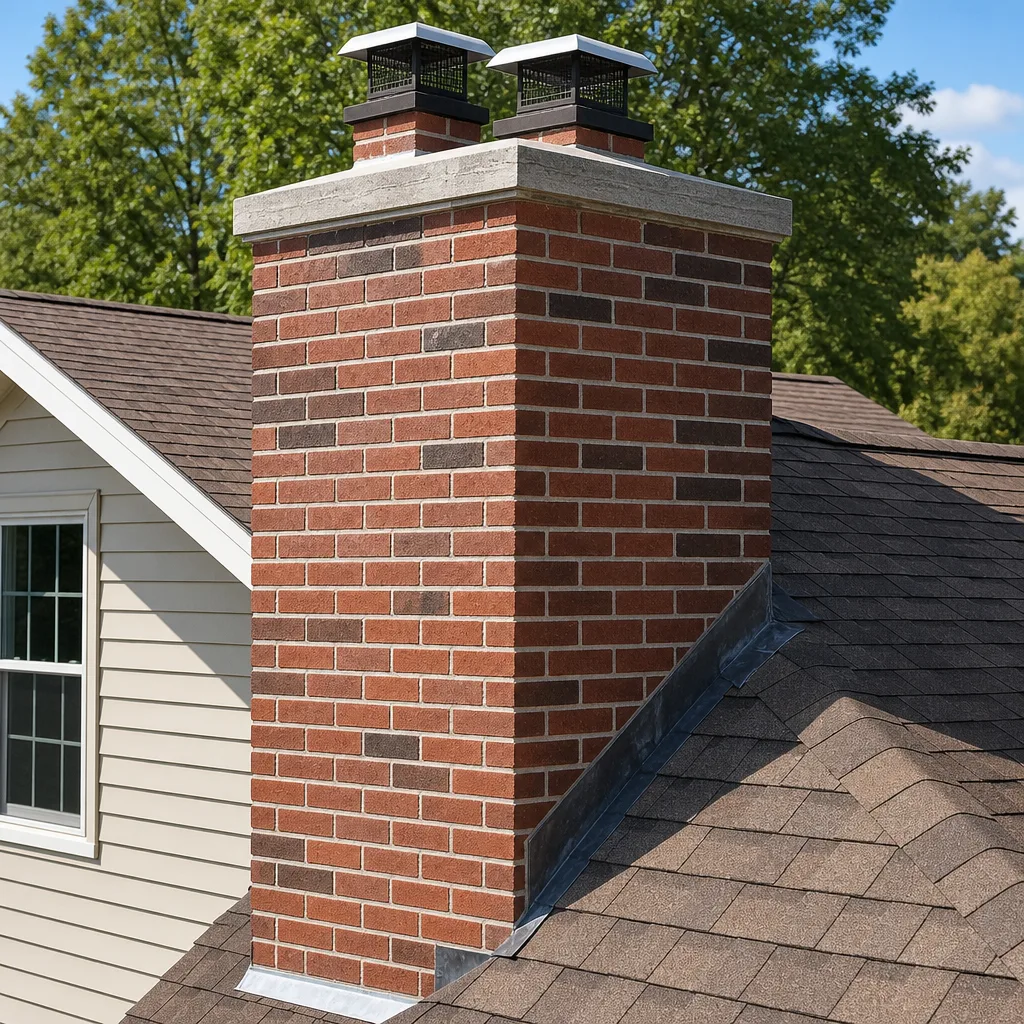
- Exterior evaluation: Crown integrity, cap condition, flashing seal, and masonry assessment from roof level or ground with telephoto documentation.
- Written report and price: Before any repair work is discussed, the homeowner receives a written condition report, photo documentation, and a written price for any recommended services. This is Haven Standard Clause 1: “Have it in writing.”
The entire process for a standard Cambridge single-family flue takes 90-120 minutes. A triple-decker multi-flue system may require half a day. The output is not just a clean flue but a documented record of system condition that satisfies insurance requirements, supports real estate transactions, and provides year-over-year comparison.
Since 2009, we’ve completed more than 38,000 chimney inspections and cleanings. Every one included a written price before work started and a documented record when finished. That archive - Clause 4 of the Haven Standard - means when we return to your Cambridge home, we know exactly what we found last time and can measure change with precision no single visit can provide.
The Camera Log: Why Documentation Beats Assumption
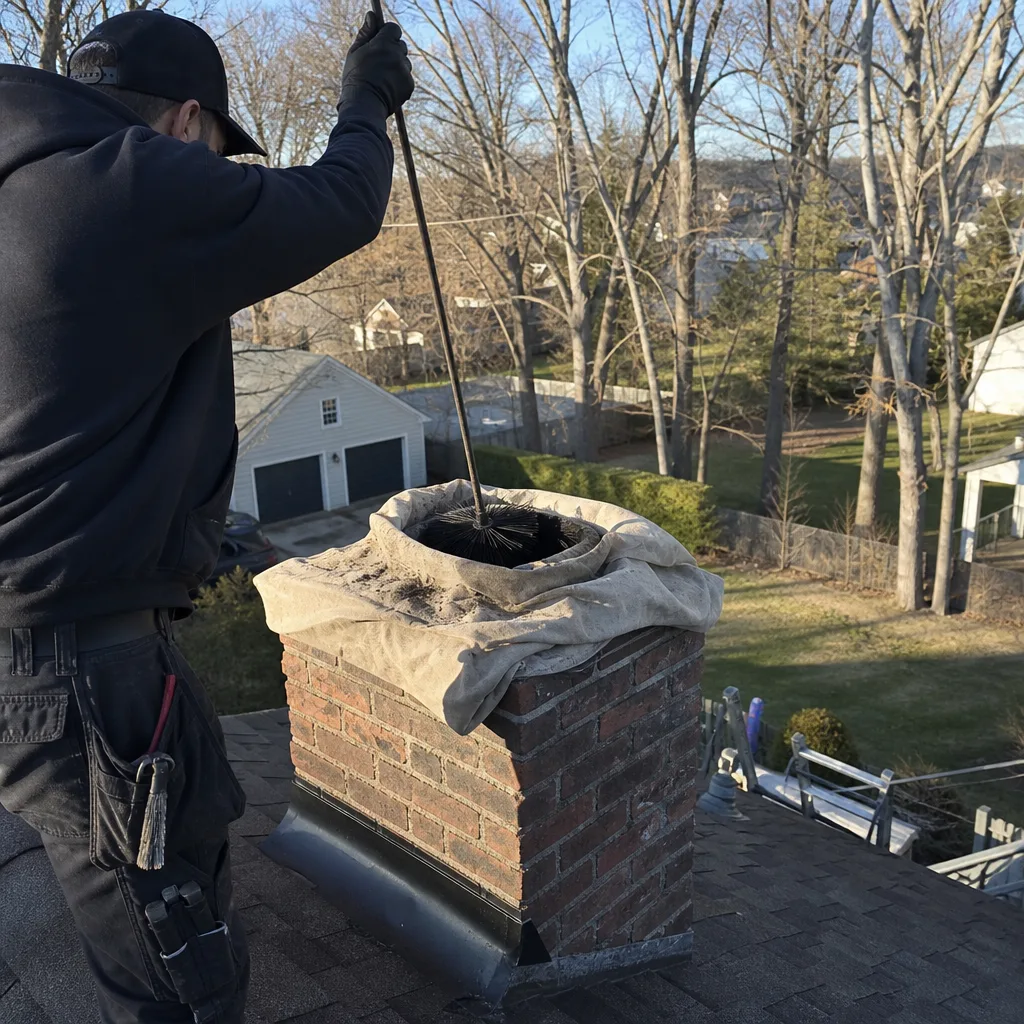
The camera log is the single most important differentiator between genuine professional service and a dressed-up DIY equivalent. At Level Two Chimney Cambridge, the camera scan is not optional, not an upsell, and not performed only when something seems wrong. It is Clause 4 of the Haven Standard, required on every job since our founding.
Here’s what the camera reveals that no brush, mirror, or flashlight inspection can match:
- Hairline cracks in clay tile: As thin as 0.3mm, invisible to the eye, sufficient to allow flue gas migration and pyrolysis of adjacent wood framing
- Mortar joint deterioration: The cementitious filler between tiles erodes faster than the tiles themselves; gaps of 3/16 inch or more require repointing or relining
- Glazed creosote deposits: Shiny, black, tar-like formations that indicate restricted airflow and improper burning; Class III creosote that requires specialized removal
- Liner displacement or settlement: Tiles that have shifted from thermal cycling or foundation movement, creating open gaps at joints
- Foreign objects and obstructions: Bird nests, collapsed masonry, tools left by previous service providers, and - in Cambridge’s older neighborhoods - remnants of original coal grate installations that restrict flue area
The camera log creates legal and financial protection. After a chimney fire in Massachusetts, insurance adjusters request documentation of professional maintenance. A dated photo record from a recognized sweep company satisfies this requirement. A homeowner’s verbal assertion that “I cleaned it myself every year” does not. We’ve been called as expert witnesses in Cambridge-area fire claims where the absence of documented inspection became the basis for partial or complete claim denial.
For Cambridge homeowners considering sale, the camera log is equally valuable. Massachusetts disclosure requirements and buyer inspection contingencies mean chimney condition is routinely negotiated. A documented clean bill of health from a recognized professional with photo evidence strengthens negotiating position. An undocumented DIY history creates uncertainty that buyers price into their offers.
Insurance, Liability, and the DIY Cleaning Record
The insurance dimension is where many Cambridge homeowners discover their DIY cleaning has created exposure they did not anticipate. Massachusetts homeowner policies vary in chimney-specific language, but the trend is toward stricter documentation requirements following increased chimney fire claims in the 2010s.
Standard policy language typically requires “reasonable maintenance” of heating systems. What constitutes reasonable maintenance is interpreted after loss. In our experience assisting Cambridge-area homeowners with post-fire claims, adjusters ask three questions:
- When was the chimney last professionally inspected and cleaned?
- Is there documentation of that service?
- Did the condition of the chimney contribute to the fire?
A DIY cleaning record answers question one with “never” or “not recently,” regardless of how diligent the homeowner has been. Without documentation, the burden shifts to the homeowner to prove maintenance was adequate. This is difficult. We’ve seen claims where the insurer’s expert found Class III creosote or liner damage that a brush cleaning would not have addressed, and the DIY history became evidence of inadequate maintenance.
Liability extends beyond insurance to personal injury. A homeowner injured falling from a Cambridge triple-decker roof, or exposed to hazardous creosote dust without proper respiratory protection, faces medical costs and potential disability. Professional sweep companies carry workers’ compensation and liability insurance for these exposures. The homeowner does not.
The Massachusetts Department of Fire Services reports that chimney fires peak in January and February, when Cambridge heating systems run continuously. A professional inspection in early fall, documented and archived, is the strongest protection against winter loss. DIY cleaning in October without camera documentation is better than nothing, but it is not equivalent protection.
What Homeowners Can Safely Do Between Professional Visits
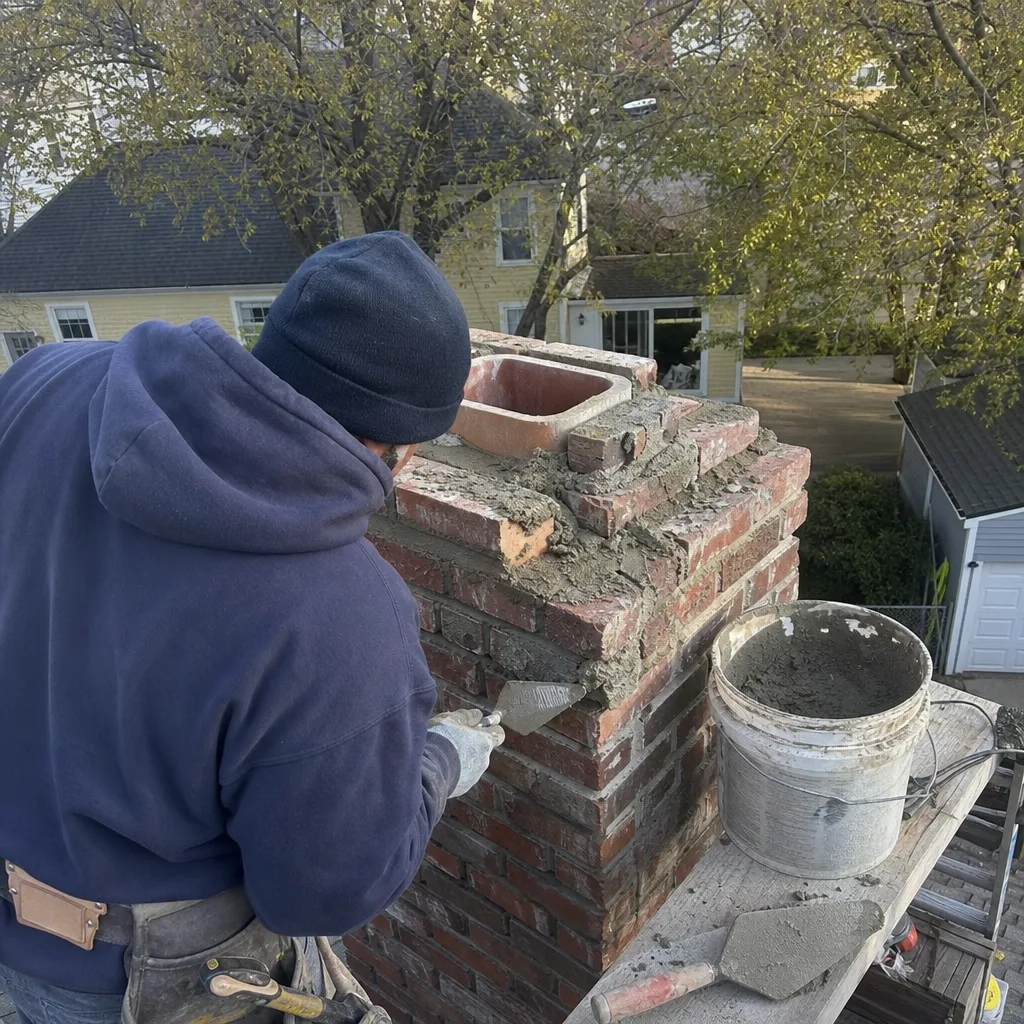
Between professional cleanings, Cambridge homeowners can perform seasonal chimney cleaning care that supports system safety without creating false confidence. These tasks are visual, external, and non-invasive. They supplement but never replace professional interior evaluation.
Monthly Visual Cap Check
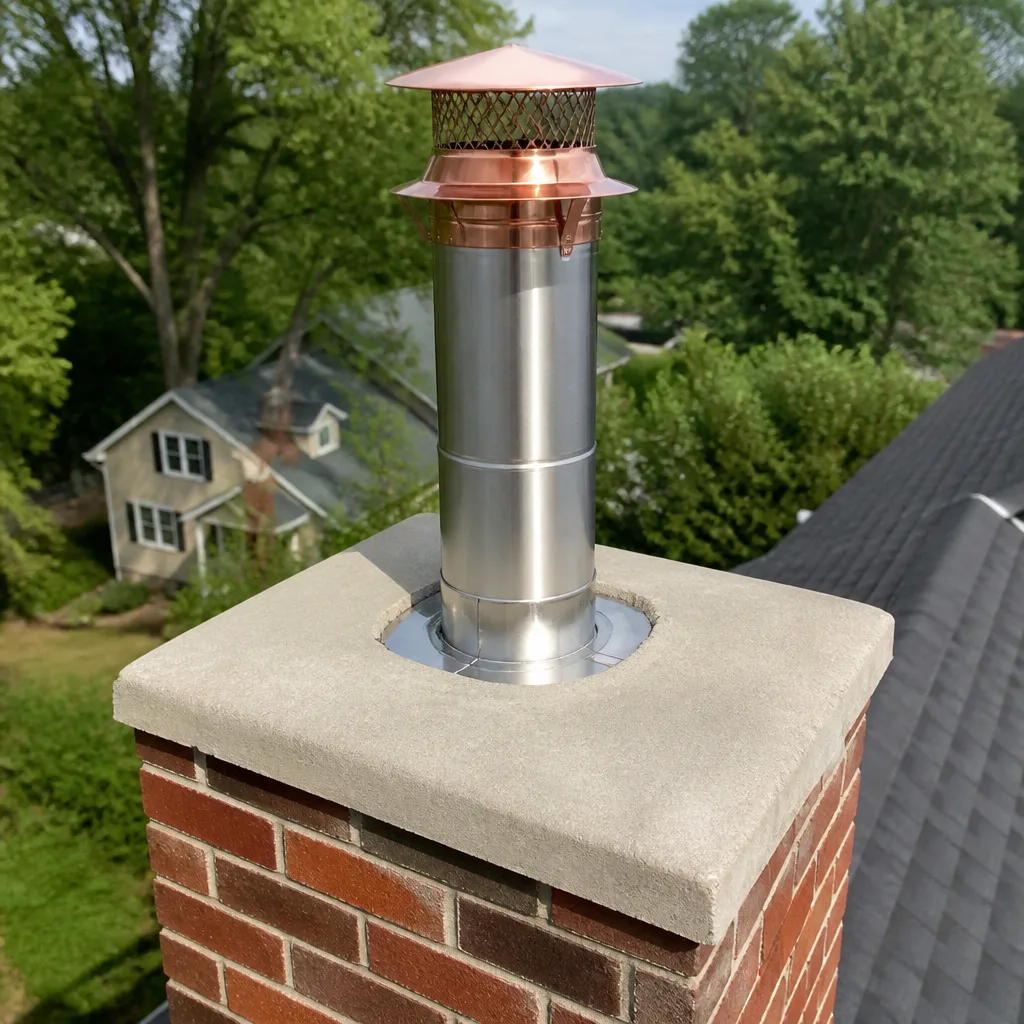
From ground level or a secure window, examine the chimney cap for visible damage, displacement, or missing mesh. A cap prevents water intrusion, animal entry, and debris accumulation. In Cambridge’s tree-dense neighborhoods - particularly near the Charles River and Fresh Pond - leaf and branch debris can block caps seasonally. If the cap is damaged or missing, schedule professional replacement with a stainless steel unit from Famco or Copperfield sized to your flue.
Firebox Visual Inspection
With the damper open and a flashlight, examine the firebox refractory panels for cracks, spalling, or deterioration. These panels reflect heat into the room and protect surrounding structure. Cracks wider than 1/8 inch or through-cracks require replacement - not a DIY repair, as improper materials can trap heat and accelerate damage. Note what you see and report it at your next professional service.
Draft Test
Before lighting a fire, hold a lit match or incense stick near the firebox opening with the damper open. Smoke should draw upward into the flue. If it blows back into the room, the chimney has negative draft - possible causes include cold flue, blockage, or house depressurization from exhaust fans. Do not operate the fireplace until a professional identifies the cause.
Ash Removal
Remove ash when it approaches the bottom of the firebox grate, typically every 2-4 fires for a Cambridge homeowner burning weekend evenings. Wait 24 hours after last use. Use a metal container with tight lid, stored on non-combustible surface outdoors. Ashes can retain embers for days. In 2017, a Cambridgeport home suffered exterior siding damage from ash stored in a plastic bucket on a wooden deck.
Burning Practices
Burn only seasoned hardwood (moisture content below 20%). Softwoods and unseasoned wood create more creosote. Never burn treated lumber, painted wood, or household trash. These practices reduce creosote accumulation between professional cleanings but do not eliminate the need for inspection.
What homeowners should not do: attempt to clean the flue with improvised tools, apply chemical creosote removers without understanding their limitations, or operate a fireplace after any suspected chimney fire (indicated by loud roaring, dense smoke, or hot exterior masonry). These actions create hazard or destroy evidence needed for professional assessment.
How to Spot a Professional Cleaning vs. a Brush Job
Not every service marketed as “professional chimney cleaning” meets the standard Cambridge homeowners need. Some providers brush the flue, glance with a flashlight, and present a bill. Here’s how to distinguish genuine professional service from a brush job with a truck wrap.
| Indicator | Professional Standard | Brush Job |
|---|---|---|
| Pre-service documentation | Exterior photos, written scope, protective setup | Minimal or no documentation |
| Inspection method | Camera scan of full flue length, real-time viewing | Flashlight look from top or bottom only |
| Smoke chamber | Hand-cleaned and inspected | Often skipped entirely |
| Written report | Detailed condition assessment with photos | Verbal summary or generic checklist |
| Pricing | Written price before work, itemized repairs | “Call for quote” or price given after arrival |
| Technician identification | Named, background-checked, uniformed, license displayed | Unidentified or subcontracted labor |
| Warranty | Written, specific, time-defined (e.g., 365-Day Done Right Promise) | Vague or verbal only |
The camera log is the decisive differentiator. Any sweep who cannot or will not show you real-time camera footage of your flue interior is not performing NFPA 211 Level 2 inspection. Ask before booking: “Will you camera-scan my flue and provide dated photos?” The answer reveals the actual service level.
At Level Two Chimney Cambridge home, our name is the standard we work to. Clause 4 of the Haven Standard requires a photo record on every job. We show you the camera feed in real time. You receive the images in your report. There is no professional service without documentation.
Cost Comparison: DIY vs. Professional in Cambridge
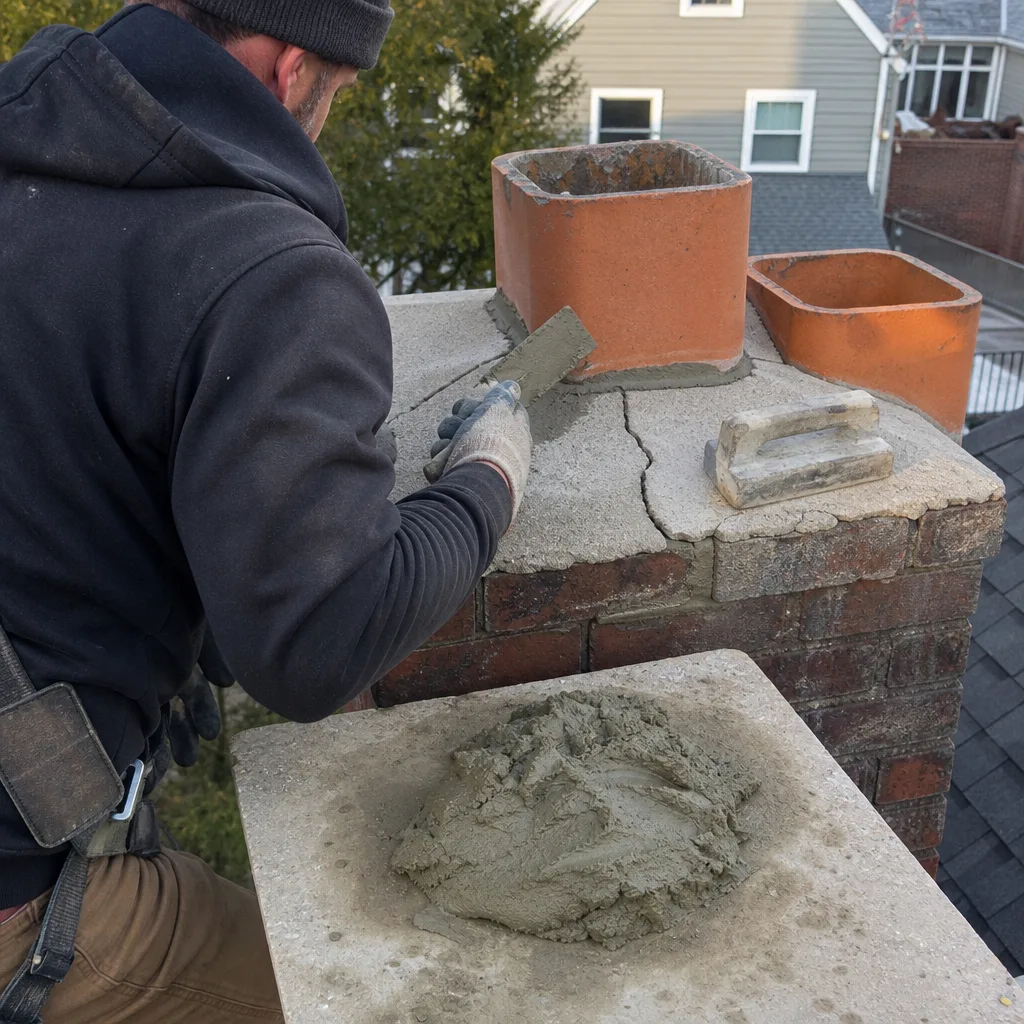
Honest chimney cleaning cost analysis requires counting all costs, including those that don’t appear on a receipt.
DIY Costs
- Equipment: Poly brush ($25-45), extension rods ($30-60), HEPA shop vacuum or rental ($150-300 purchase, $40/day rental), drop cloths ($20), PPE including respirator rated for fine particulate ($30-50), ladder or roof access equipment if needed ($100+)
- Time: 3-4 hours for a straightforward single flue, longer for complex systems; does not include learning curve for first attempt
- Risk exposure: Fall injury (particularly on Cambridge’s steep triple-decker roofs), respiratory damage from creosote particulate, property damage from improper technique
- Documentation value: Zero for insurance, real estate, or warranty purposes
Professional Costs in Cambridge
Based on our service area and current market:
| Service | Price Range |
|---|---|
| Standard chimney sweep with NFPA 211 Level 2 inspection (single flue, open fireplace) | $285-$385 |
| Chimney sweep with inspection (wood stove or insert) | $325-$425 |
| Multi-flue discount (2+ flues same visit) | $225-$295 per additional flue |
| Class III creosote removal (chemical treatment + rotary cleaning) | $450-$650 additional |
| Camera inspection only (no sweep needed) | $225-$295 |
The professional price includes: trained technician, all equipment, full cleanup, written condition report, dated photo documentation, and the 365-Day Done Right Promise. It also includes the documentation that satisfies insurance requirements and supports real estate transactions.
For Cambridge homeowners burning wood regularly - say, 30+ fires per season - professional service every 1-2 years is cost-effective when the avoided risks are counted. A single chimney fire can cause $10,000-$50,000 in damage. A denied insurance claim based on inadequate maintenance documentation can cost the full replacement value. The $300-$400 professional service is not the expensive option; it’s the insured, documented, warranted option.
We also offer a Free Second Opinion on any written estimate from another Cambridge-area provider. Bring us their written quote. We’ll review their scope, their pricing, and their documentation commitment against what the Haven Standard requires.
Common Mistakes to Avoid
- Brushing an uninspected flue: In Cambridge’s older housing, aggressive brushing can fracture already-compromised clay tiles. Always inspect before cleaning, or hire a professional who will.
- Using the wrong brush size or stiffness: An oversized brush wedges in the flue; an undersized one misses the walls. Stiff wire brushes damage stainless steel liners. Match equipment to liner type or hire someone who carries the full range.
- Cleaning from the top down without fall protection: Cambridge triple-decker roofs are steep, often slate or aging asphalt. Falls from height are a leading cause of homeowner injury during DIY maintenance.
- Assuming a clean flue is a sound flue: Surface cleanliness reveals nothing about liner integrity, joint condition, or hidden damage. This assumption has preceded multiple Cambridge chimney fires we’ve investigated.
- Ignoring the smoke chamber: The area above the firebox collects the most dangerous deposits and is inaccessible to standard homeowner brushes. Skipping it leaves the highest-risk zone unaddressed.
- Burning unseasoned wood to “save money”: Green or wet wood creates Class III creosote rapidly, accelerating the need for professional service and increasing fire risk. The savings are illusory.
- Accepting “it looks fine” as professional assessment: Any sweep who does not camera-scan and document is not performing to NFPA 211 Level 2. In Cambridge’s market, demand the standard that the name implies.
When to Call a Professional
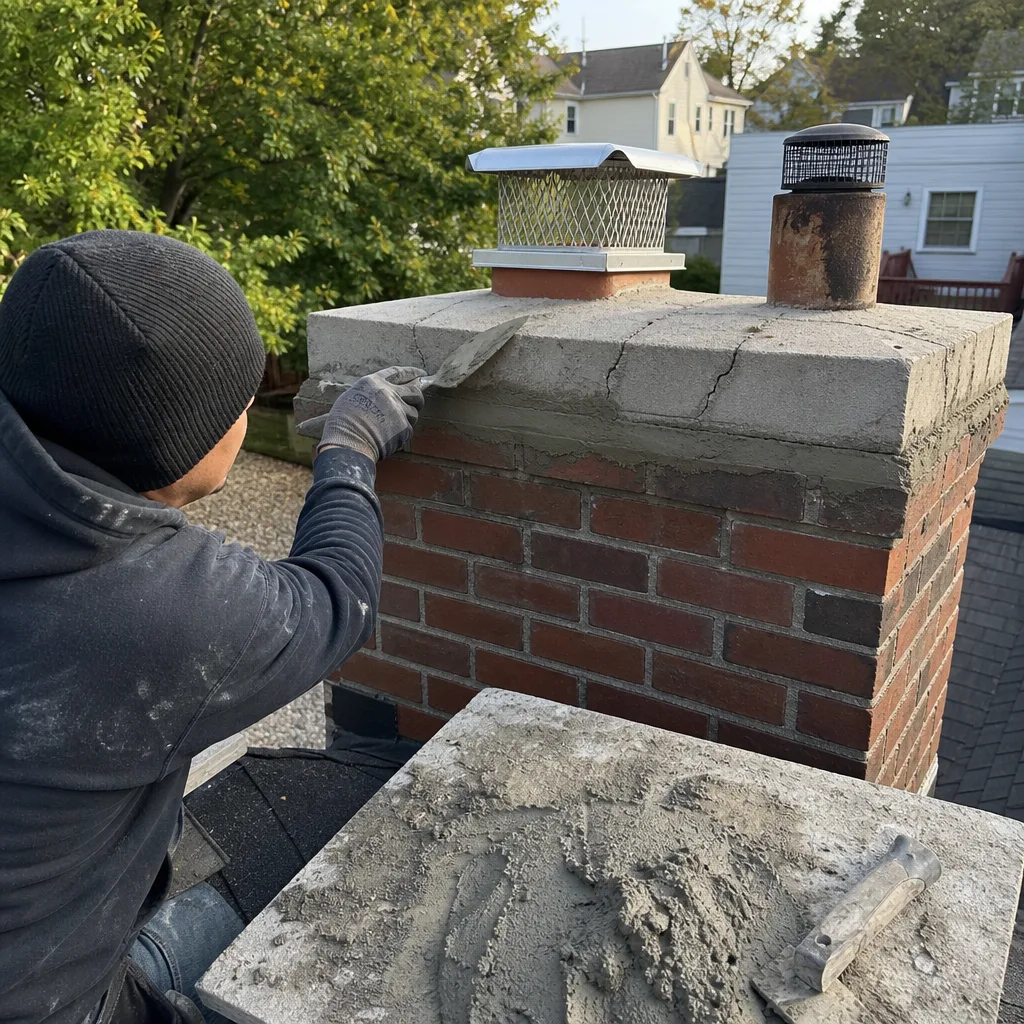
Call a professional Cambridge chimney sweep immediately if you observe any of the following: visible cracks in exterior masonry or crown pieces on the ground; smoke entering the room during fireplace operation; a strong, acrid odor from the fireplace in warm weather (indicating active creosote buildup); white staining (efflorescence) on exterior chimney brick; or any evidence of prior chimney fire including discolored or distorted metal components.
Schedule professional service before the burning season begins, ideally September or October, when Cambridge sweep companies have availability and you have time to address any findings before cold weather demands daily heating. Find more guides & resources on our blog. For wood-burning households, annual professional service is the standard; gas and oil systems typically require inspection every 2-3 years per NFPA 211, though Cambridge’s older liners may need more frequent evaluation.
Level Two Chimney Cambridge offers free estimates in Cambridge. Our technicians are background-checked, uniformed, and named before arrival. You’ll receive a text when your tech is en route. Call (857) 309-1908 to schedule, or visit our Chimney Repair in Cambridge page to learn more about our repair and relining services.
Frequently Asked Questions
A professional chimney sweep with NFPA 211 Level 2 camera inspection in Cambridge typically costs $285-$385 for a standard single-flue fireplace, or $325-$425 for a wood stove or insert. Multi-flue homes receive reduced per-flue pricing on additional units. This includes the sweep, camera scan, written report, and dated photo documentation. Call (857) 309-1908 for an exact quote - estimates are free.
You need a new liner when camera inspection reveals cracked, spalled, or displaced clay tiles; significant mortar joint gaps; or flue gas leakage evidence. Cleaning cannot repair liner damage and may mask deterioration by presenting a clean surface. We recommend relining only when camera evidence shows failure, and we show you the images before recommending any work. If a competitor recommends relining without camera proof, get a Free Second Opinion from Level Two Chimney Cambridge.
Wood-burning fireplaces and stoves in Cambridge should be swept annually if used regularly (30+ fires per season), or when 1/8 inch of creosote accumulation is measured. Gas and oil systems require inspection every 2-3 years. Cambridge’s pre-1940 clay tile liners may need more frequent evaluation due to age and climate exposure. The NFPA 211 standard is the governing reference, not calendar convenience.
Skipped maintenance allows creosote accumulation, which restricts flue airflow and increases combustion temperature. The result is chimney fire risk, carbon monoxide backdraft potential from incomplete combustion, and accelerated liner deterioration from moisture and acid exposure. In Cambridge’s insurance market, a fire claim with no documented professional maintenance faces higher denial risk. The deferred cost typically exceeds the maintenance cost by orders of magnitude. Call (857) 309-1908 to schedule before the burning season.
You can, but the economics rarely favor this approach. A professional sweep with inspection costs $285-$385; a camera-only inspection costs $225-$295. The marginal savings of DIY cleaning ($25-$50 in brush costs against $60-$90 in time value) disappear when you still need professional documentation. Additionally, DIY brushing can damage aged liners, creating repair needs that a professional cleaning would have identified before causing harm. For most Cambridge homeowners, professional service is the efficient choice.
A chimney sweep removes combustion deposits from the flue, smoke chamber, and firebox. A chimney inspection evaluates system condition without necessarily cleaning. NFPA 211 defines three inspection levels: Level 1 (visual, accessible areas), Level 2 (camera scan of full flue interior, required at property sale or after fire), and Level 3 (destructive investigation when hidden hazards are suspected). At Level Two Chimney Cambridge, our standard service combines sweep with Level 2 inspection - cleaning without documentation is incomplete, and inspection without cleaning may miss deposits that obscure damage.
The Bottom Line
DIY chimney cleaning in Cambridge removes surface soot but cannot inspect, document, or certify the hidden conditions that determine safety. The city’s pre-war housing stock, multi-story construction, and freeze-thaw climate create failure modes that brushes cannot detect and YouTube tutorials cannot address. Professional service with camera-scan documentation - the NFPA 211 Level 2 standard - provides the inspection record that insurance requires, real estate transactions demand, and prudent homeowners need to sleep soundly through Cambridge’s heating season.
Between professional visits, perform visual cap checks, firebox inspections, and draft tests. Burn seasoned hardwood. Remove ashes safely. These practices support system health but do not replace documented interior evaluation. The camera log is the difference between knowing and hoping.
Since 2009, Level Two Chimney Cambridge has inspected and cleaned more than 38,000 chimneys under the Haven Standard. Every job included a written price before work started, a camera-scan photo record, and the 365-Day Done Right Promise. We’re independently owned and operated, with background-checked technicians and live phone support 24 hours a day. For Fireplace Services in Cambridge or any chimney concern, call (857) 309-1908 for a free estimate. We’ll show you what your flue looks like, explain what it means, and give you a written price before any work begins.
Written by Corrine Halstead, Owner at Level Two Chimney Cambridge, serving Cambridge since 2009.