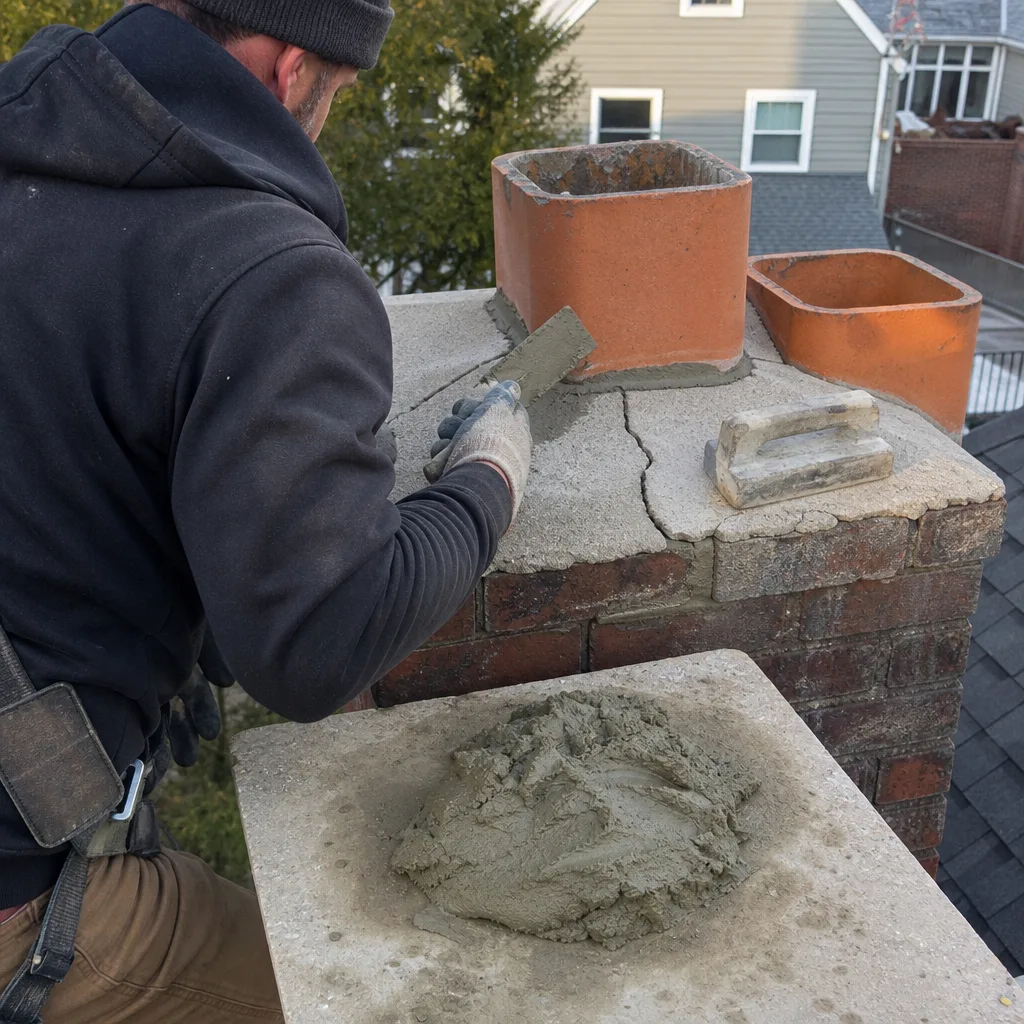
Level 1 sweep and inspection to the NFPA 211 annual standard - flue, crown, cap, and flashing checked and photographed
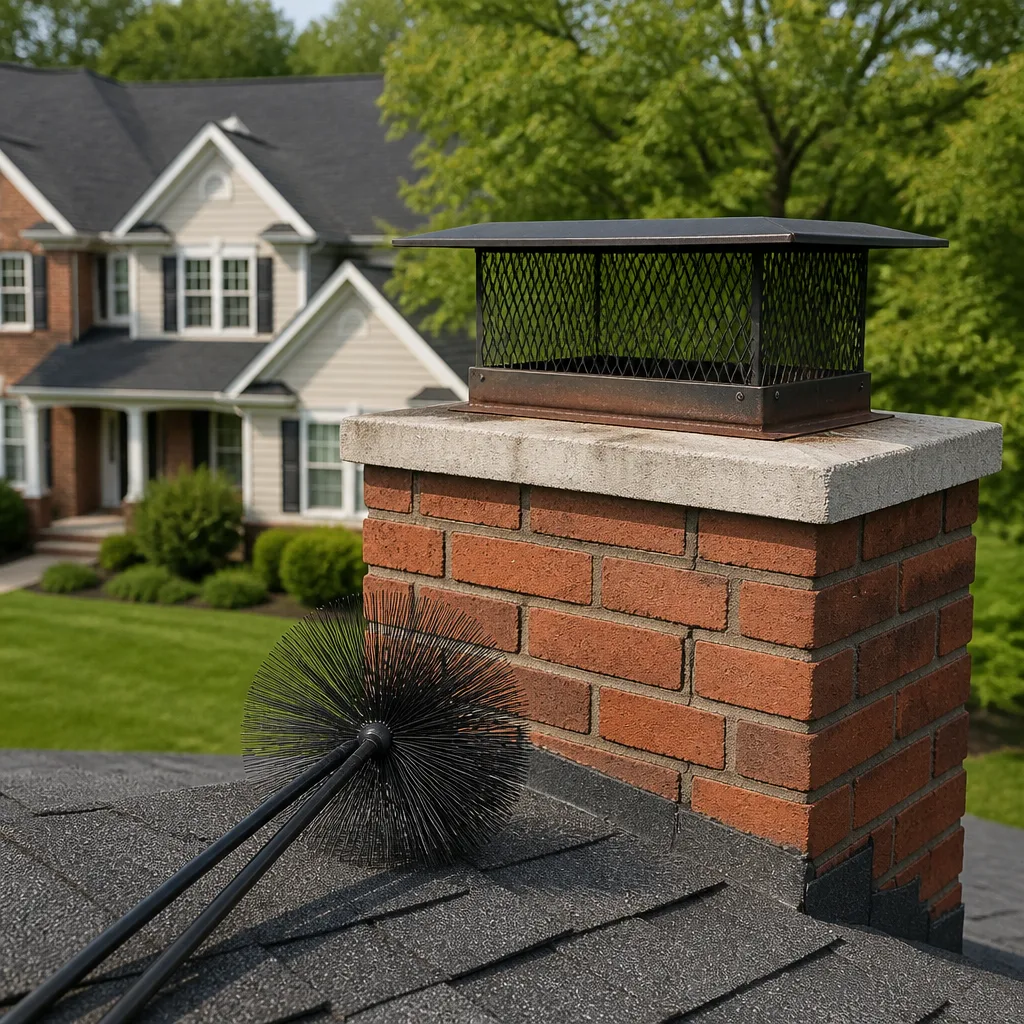
Chimney sweep logs do not sweep chimneys. They loosen some creosote - which then falls where a brush and vacuum still have to collect it.
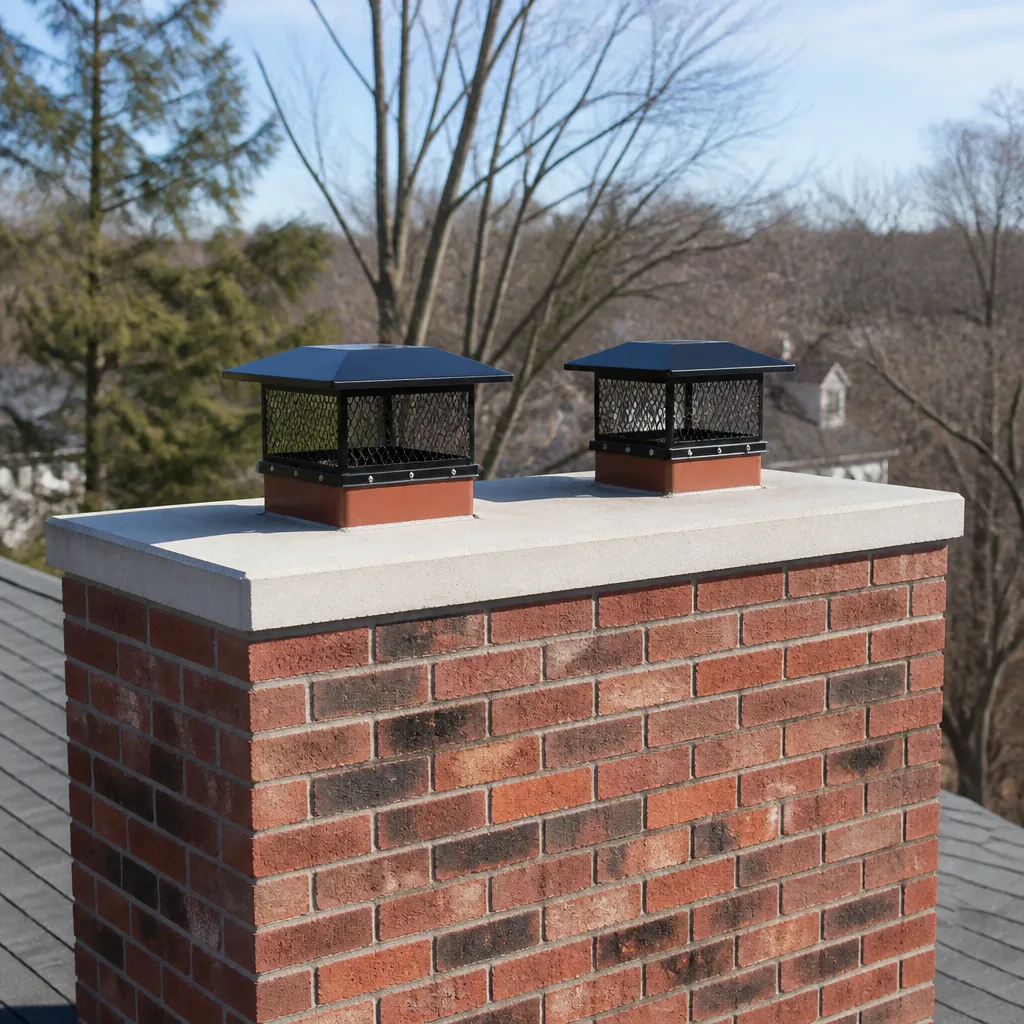
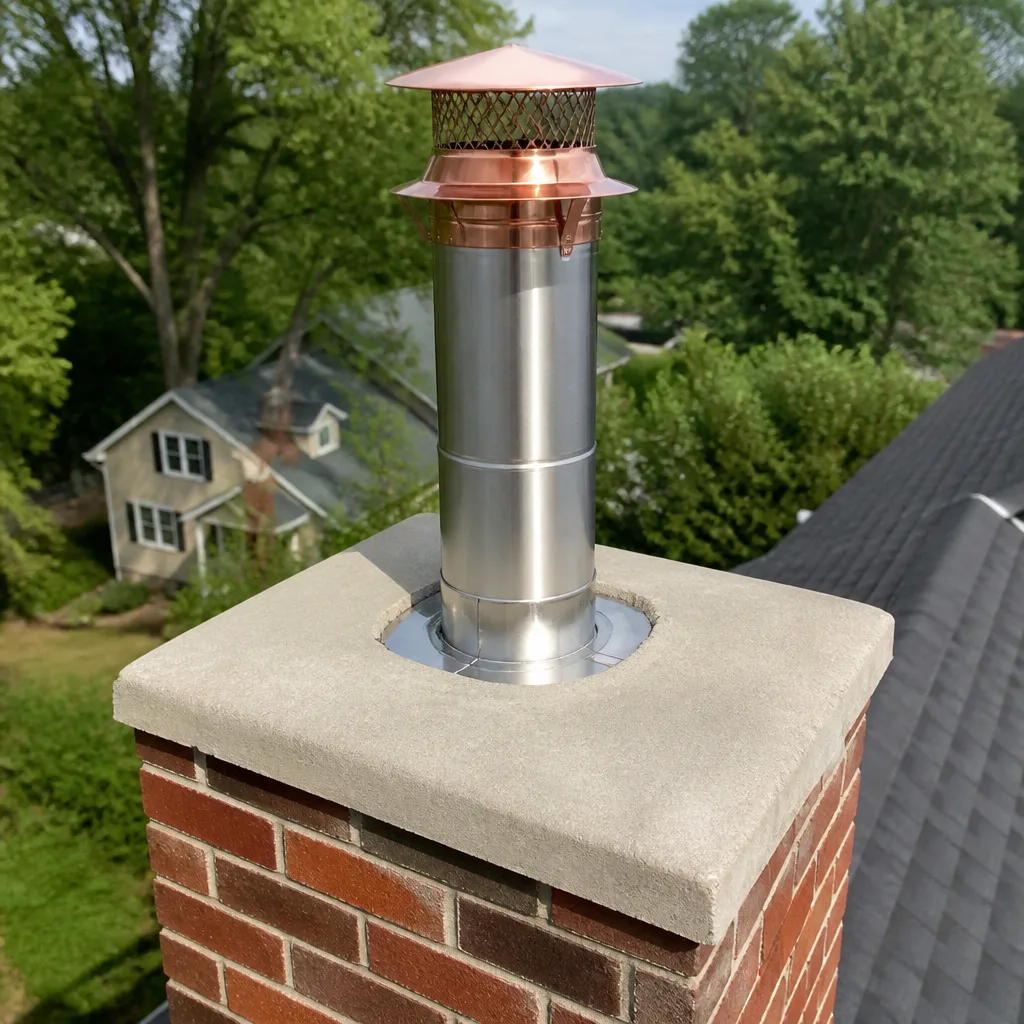
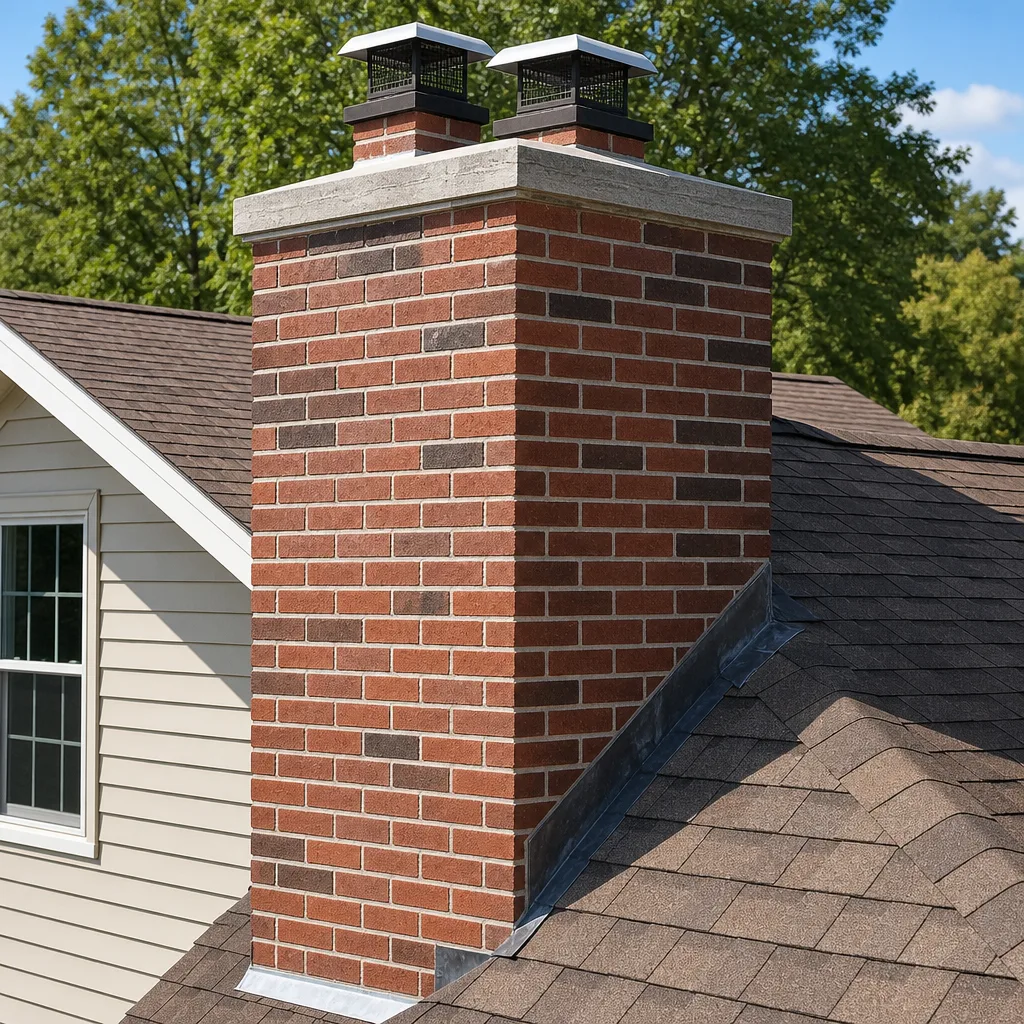
Gas fireplace service
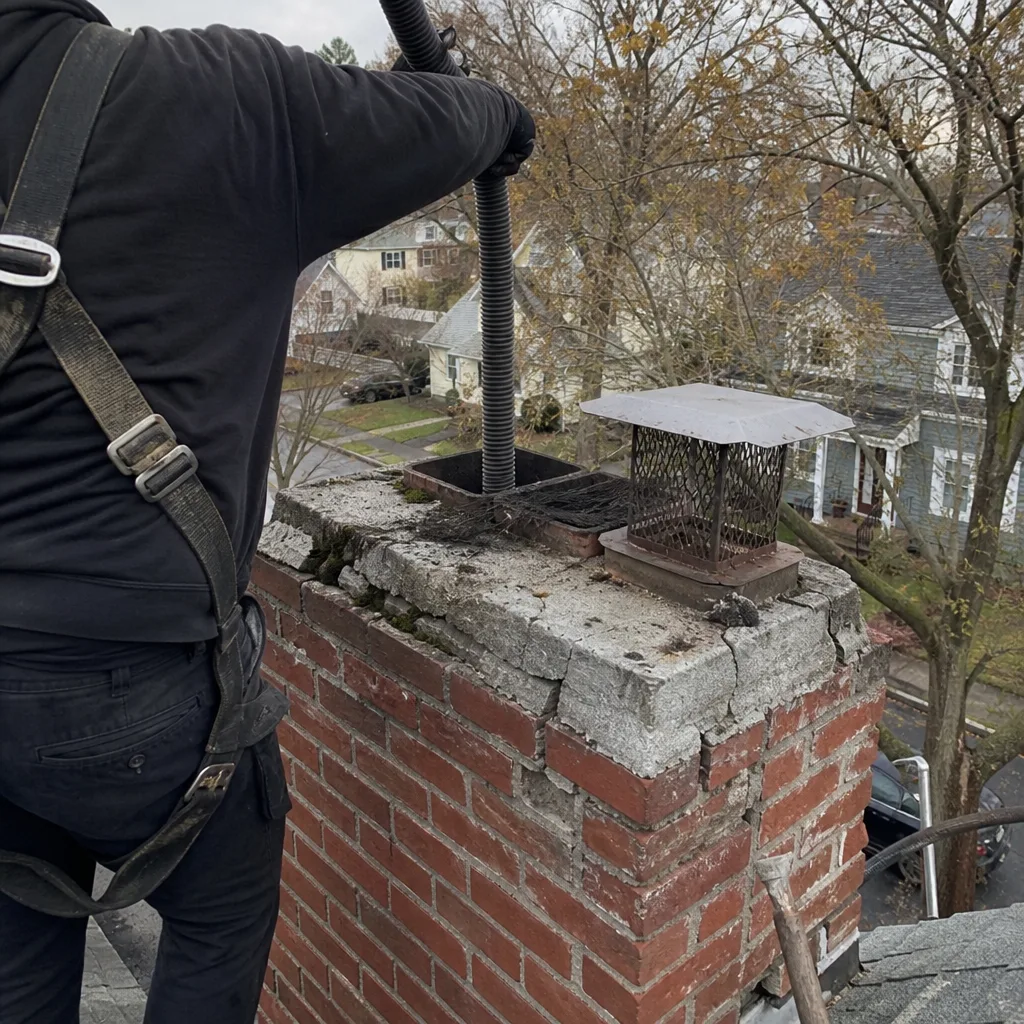 Before
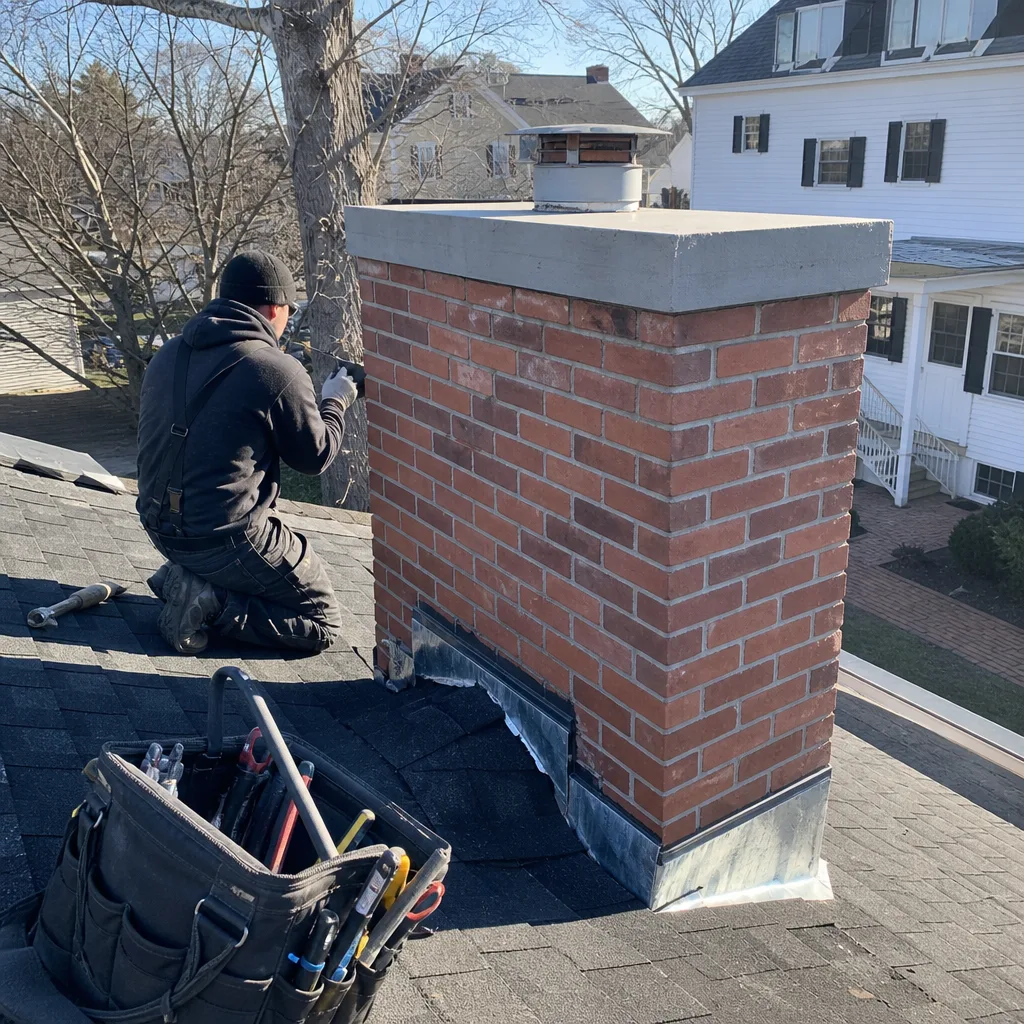 After
After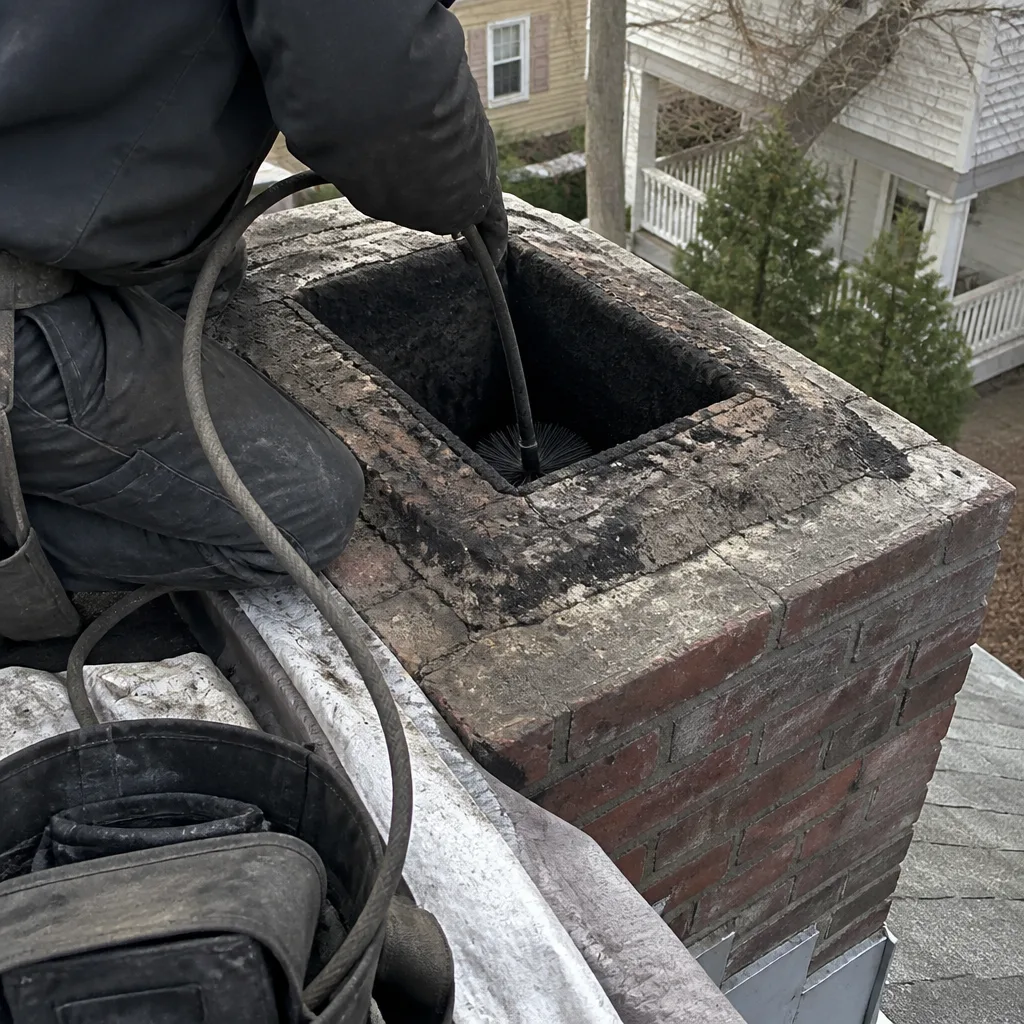 Before
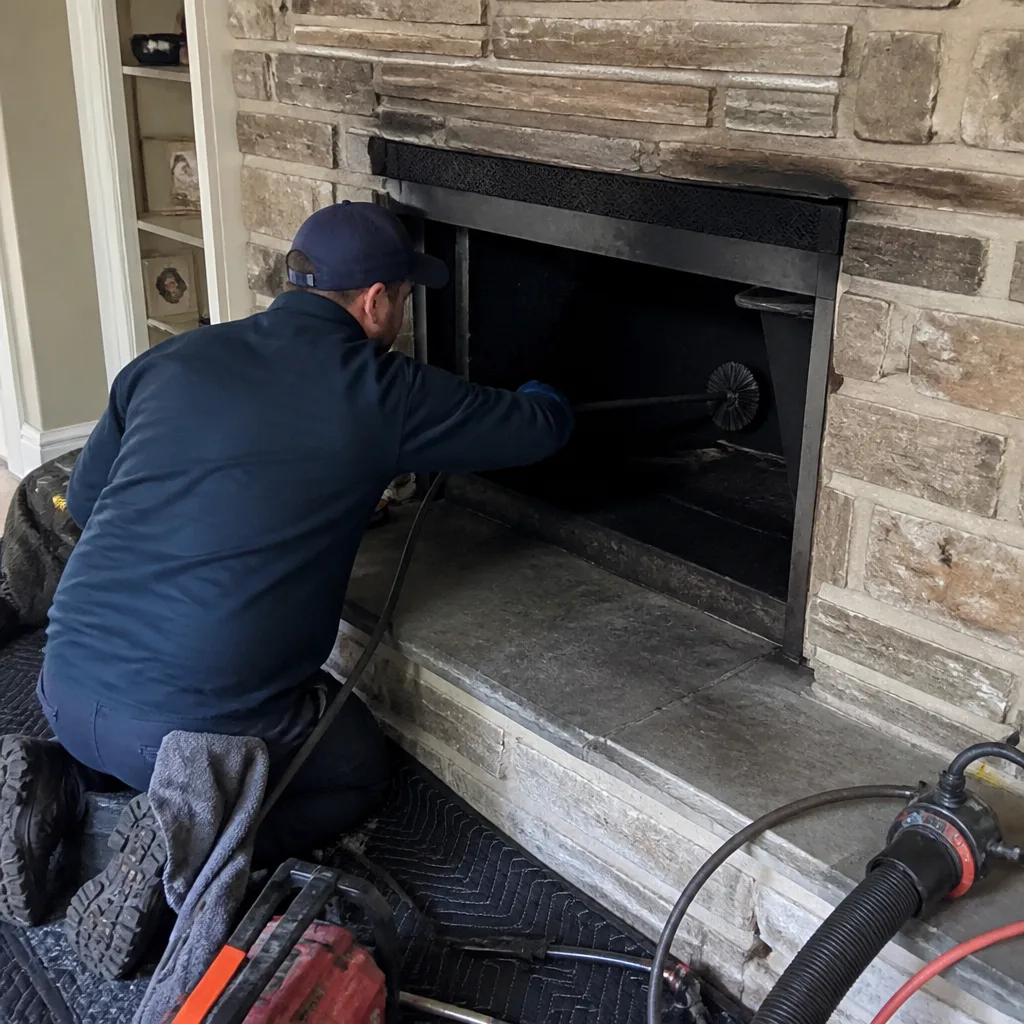 After
After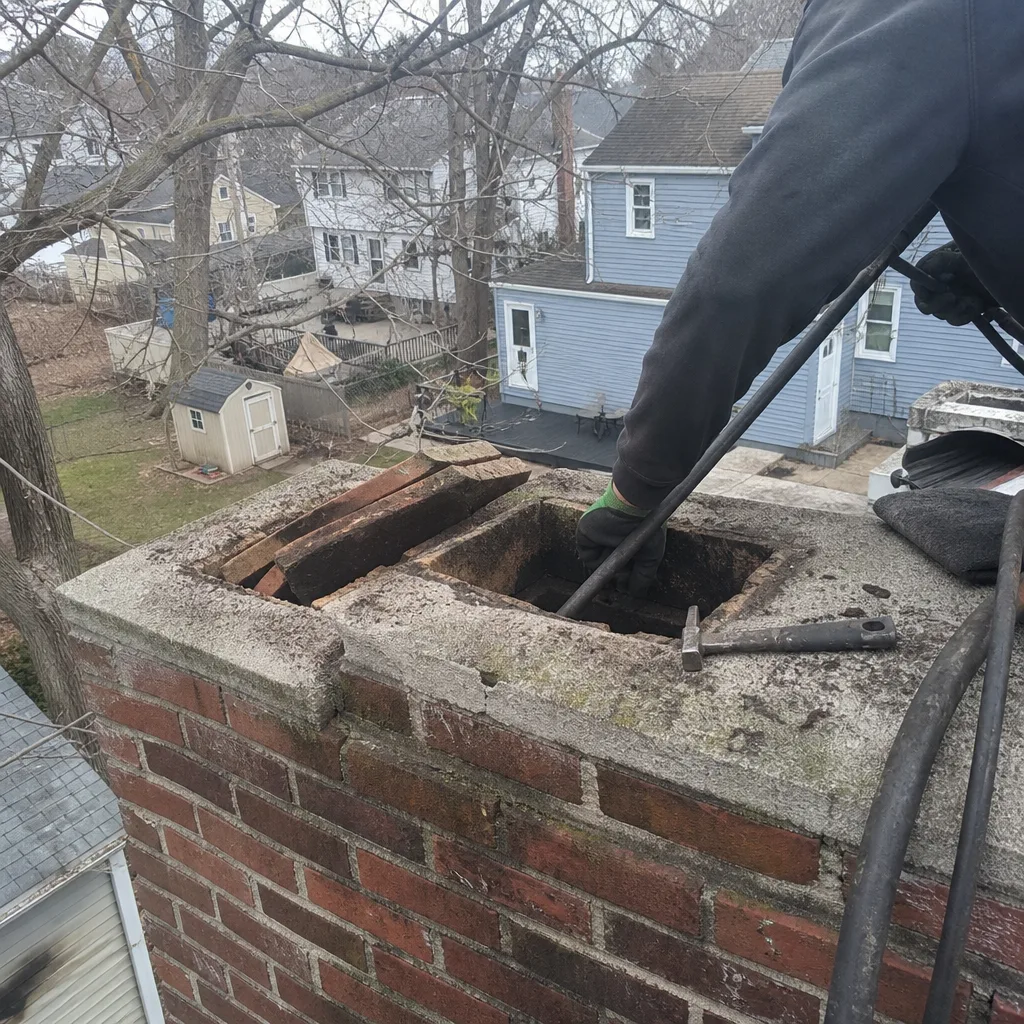 Before
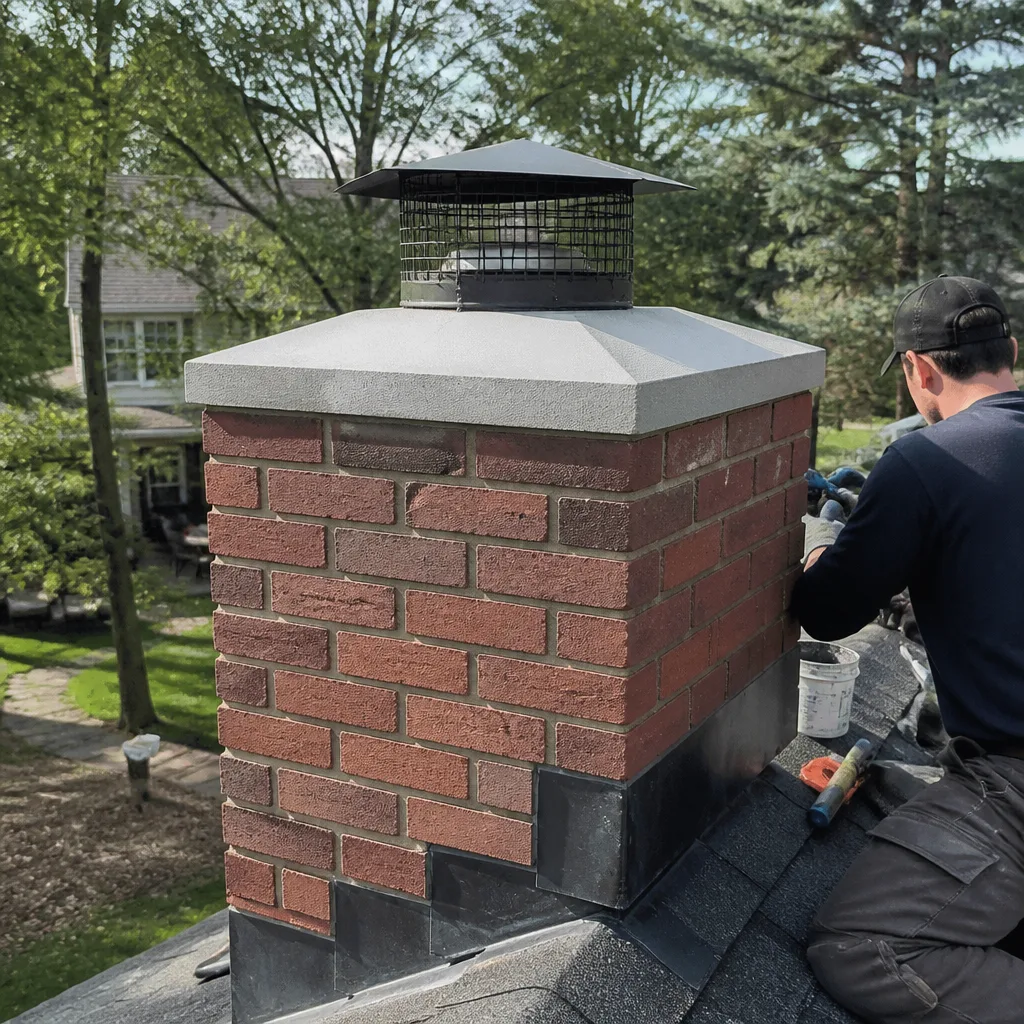 After
AfterFast, Reliable Chimney Cleaning & Sweep Across Newton
A typical chimney sweep and Level 2 camera inspection in Newton runs $280-$420 and includes a documented photo record of your flue condition. We’re usually scheduling 2-4 days out for routine sweeps in Newton, with dispatch coordinated from our Boston office and crews working the city daily. Call (857) 309-1908 for a written price before anyone books.
Newton’s 13 villages hold thousands of chimneys built during the streetcar-suburb boom from the 1880s through the 1920s. We’ve cleaned and inspected flues in Newton Centre, Newtonville, and Waban long enough to know the patterns: oversized coal-era brick stacks, oil-to-gas conversions that skipped liner upgrades, and mature oaks that fill uncapped flues with debris before the first frost. Our Chimney Cleaning & Sweep team doesn’t brush and run. We camera every flue, document what we find, and put the price in writing before any work starts.
Why Level Two Chimney Cambridge Is Newton’s Preferred Chimney Cleaning & Sweep Company
We’ve completed more than 38,000 chimney inspections and cleanings since 2009, and a significant share of those have been in Newton’s dense, older housing stock. Our Newton customers leave reviews that mention the same things repeatedly: the tech showed them the camera footage, explained what they were looking at without pushing, and left a written scope with a price that matched the final invoice.
Response time to Newton is typically same-week for routine sweeps during shoulder season, though we book heavier in September and October when residents near the Charles River corridor start lighting fires. Our crews know the local patterns: the freeze-thaw damage concentrated in exposed stacks above the roofline, the dual-flue configurations common in Newtonville’s Four Squares, and the leaf litter problems in Chestnut Hill’s canopy cover.
Every technician is background-checked, uniformed, and assigned by name. You get a text when they’re en route. License information is displayed on every page. And Clause 1 of the Haven Standard - “Have it in writing” - means the written price, written scope, and written warranty arrive before work begins, not after the truck is in your driveway.
Our Chimney Cleaning & Sweep Services in Newton
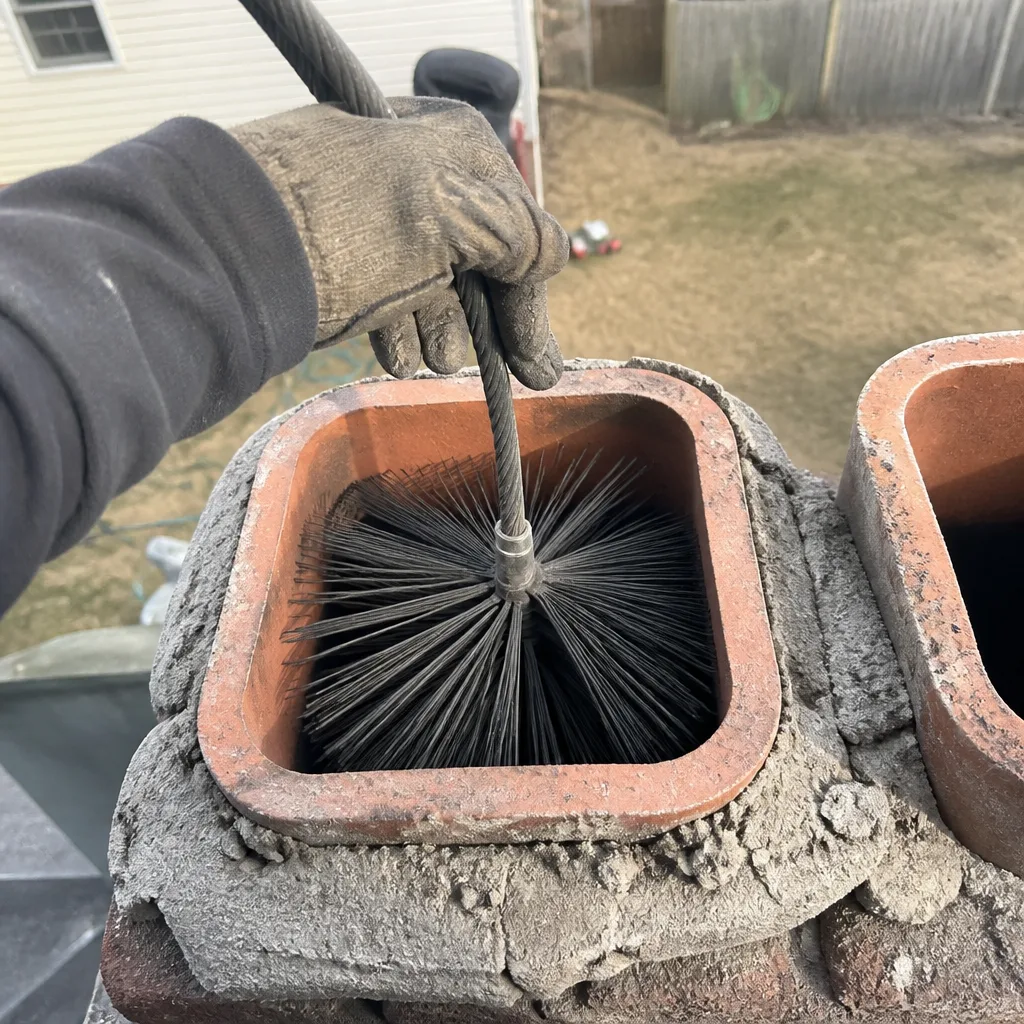
Level 1 Inspection
A Level 1 inspection is a visual examination of the readily accessible portions of your chimney system, appropriate for annual maintenance on chimneys that haven’t changed service or experienced damage. In Newton, we often perform these as part of a routine sweep on newer installations or well-maintained systems where the homeowner has documentation of recent liner work. The inspection covers the exterior, firebox, and damper, but does not include camera access to the flue interior. If we spot spalling brick, deteriorated mortar, or signs of moisture intrusion common in Newton’s freeze-thaw climate, we’ll recommend a Level 2 inspection before you light the next fire.
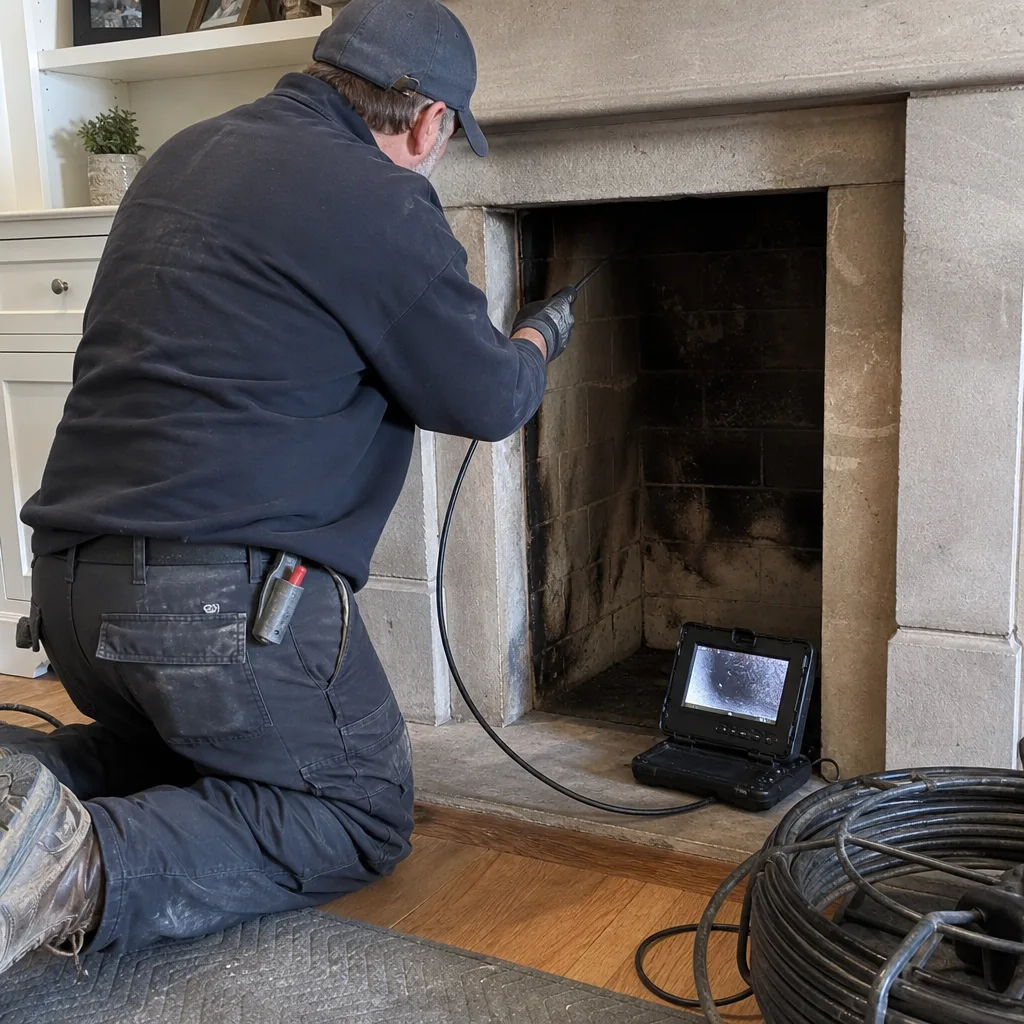
Level 2 Inspection
This is our standard for every first visit to a Newton home, and it’s what most of our customers book. A Level 2 inspection follows NFPA 211 guidelines and includes a camera scan of the entire flue interior, from firebox to crown. In Newton’s 1885-1940 housing stock, this is where we find the problems that brushing alone misses: cracked or offset clay tile in multi-flue stacks, unlined flues still venting post-conversion gas appliances, and debris blockages that no flashlight inspection would reveal. The camera footage is documented, archived under Haven Standard Clause 4, and reviewed with you on-site. We wrote the clause in 2009 because we were tired of an industry that treated visual inspection as sufficient. In Newton, it rarely is.
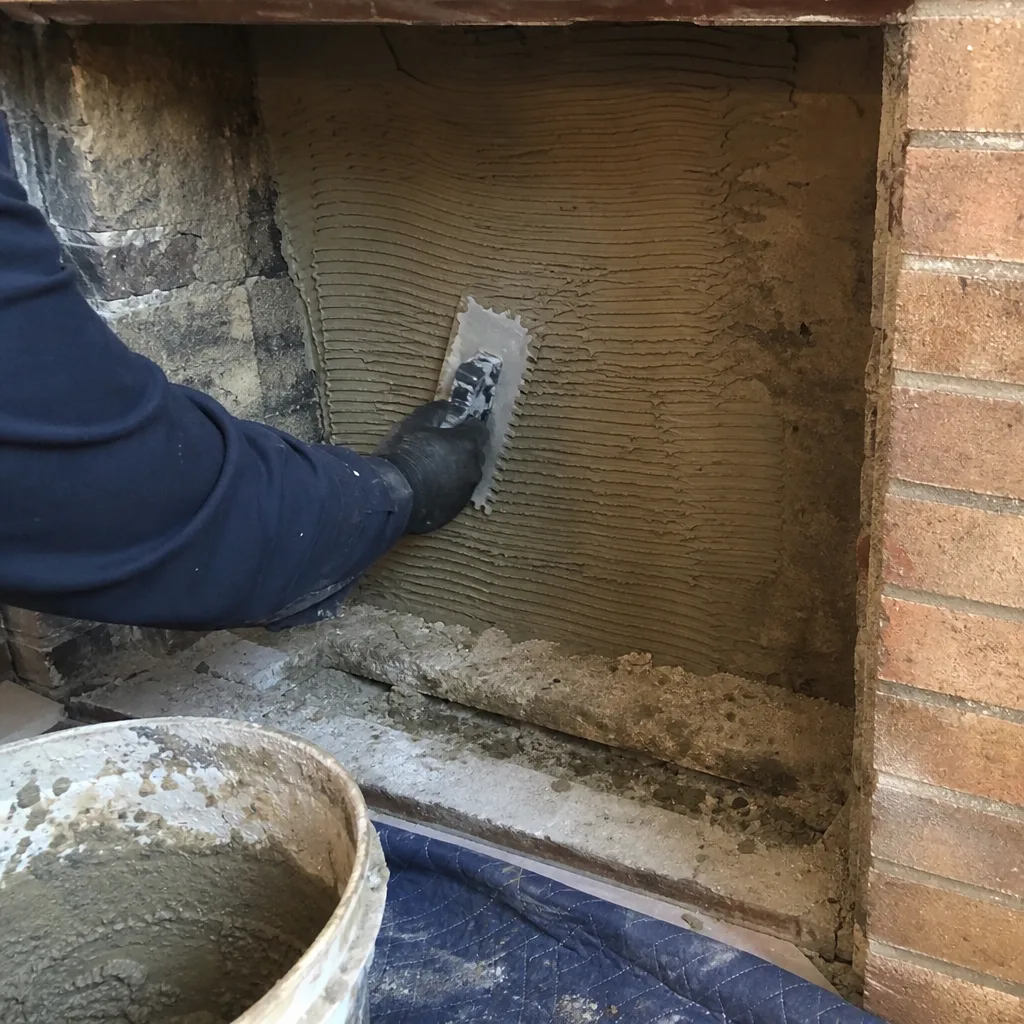
Creosote Removal
Creosote accumulates in three classes. First-degree creosote is sooty, powdery, and brushes off easily - common in Newton homes with dry hardwood fires and proper draft. Second-degree creosote forms crunchy flakes or chips, often from restricted airflow or smoldering fires. Third-degree creosote, or glaze, is the dangerous stuff: a hard, tar-like coating that can ignite at temperatures above 1,000°F and burns hot enough to crack clay tile or damage surrounding structure. Newton’s older, oversized flues sometimes run cooler than designed, especially when gas appliances vent into stacks sized for coal. Cooler exhaust means more condensation and faster creosote buildup. We remove creosote with rotary chains, whips, or chemical treatments depending on class and thickness, and we camera afterward to confirm the flue is clean and intact.
Soot Removal
Soot is the carbon residue from incomplete combustion, finer and less hazardous than creosote but still a marker of poor efficiency and a respiratory irritant if it enters living space. Newton’s gas conversions sometimes produce surprising soot volumes when appliances are improperly tuned or vented into oversized flues that can’t maintain adequate draft. We remove soot during every sweep, but we also note its volume and character - heavy soot often signals a venting problem that needs correction beyond cleaning.
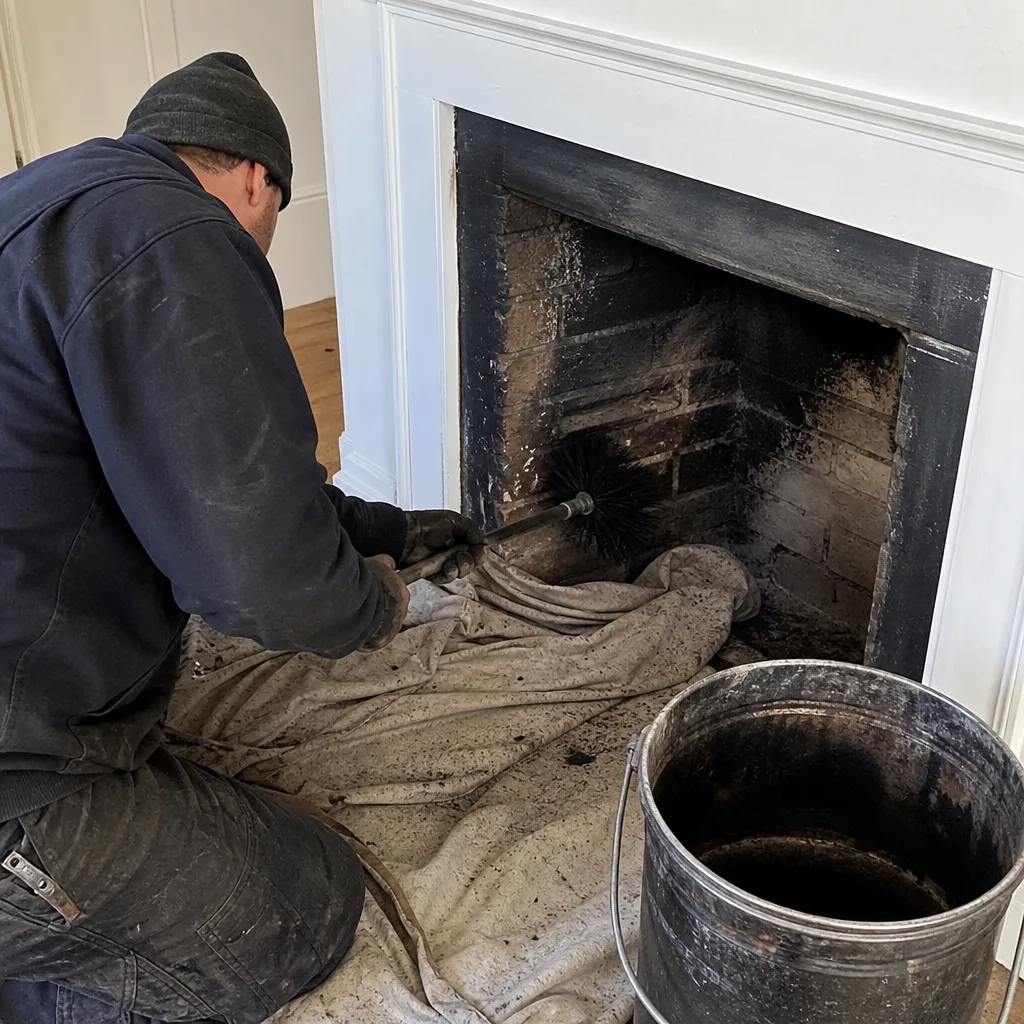
Annual Sweep
The National Fire Protection Association recommends annual inspection and sweeping as needed. In Newton, we push harder for annual service because of the local failure modes: freeze-thaw mortar damage that opens new pathways for gases and moisture, leaf debris accumulation in uncapped flues, and the lingering effects of decades of fuel conversions on chimneys never properly re-lined. An annual sweep with Level 2 camera inspection catches these issues before they become carbon monoxide events or structural failures. We schedule recurring customers with reminder calls in late summer, before the Newton burning season starts in earnest.
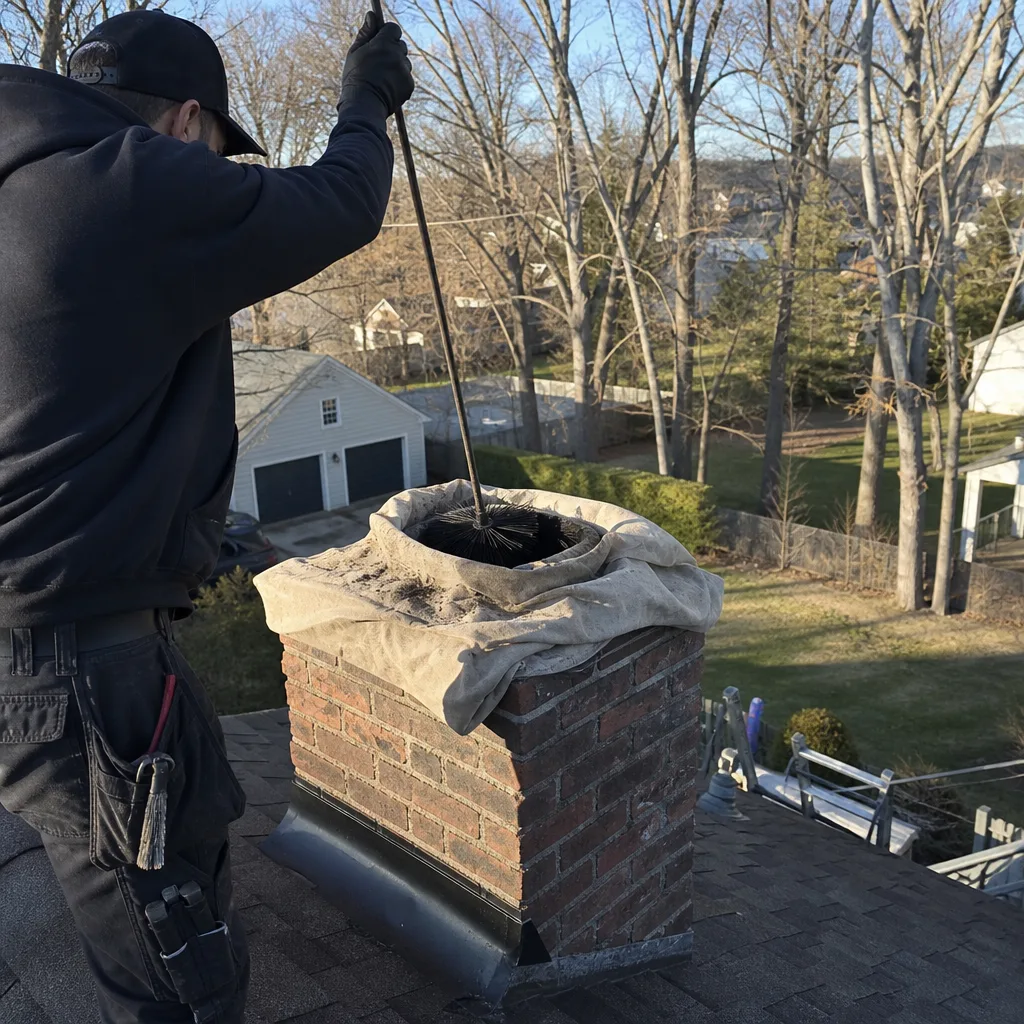
Fireplace Cleaning
Fireplace cleaning addresses the firebox, smoke chamber, damper, and hearth - the visible and semi-visible components that affect draft, efficiency, and safety. In Newton’s older homes, smoke chambers are often corbeled brick (stepped inward toward the flue) with rough surfaces that trap creosote and restrict airflow. We parget smooth or clean corbeled chambers as needed, inspect damper operation, and check for proper clearances to combustibles. A clean fireplace draws better, smells less, and presents less fire risk.
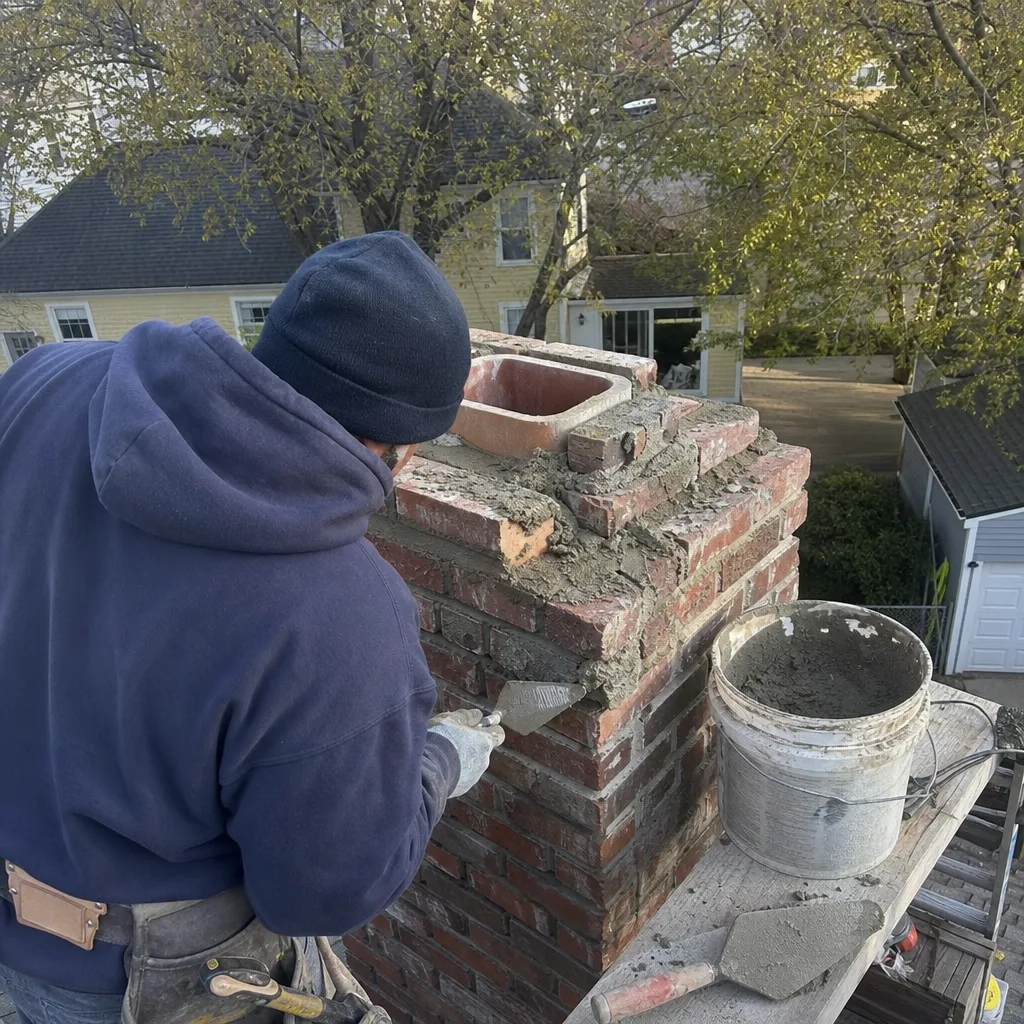
What happens when you call
- 1
A real person answersNo phone trees - you reach a local pro.
- 2
You get an upfront price rangeHonest numbers before anyone is dispatched.
- 3
A background-checked tech heads outLicensed & insured, dispatched right away.
- 4
You approve before work beginsNothing starts until you say go.
BeforeAfterTrusted Brands We Service in Newton
We source materials through Haven’s buying network to keep customer prices honest, and we stock components from DuraFlex, HeatShield, and Gelco for Newton jobs requiring liner repair or replacement. DuraFlex stainless liners are our standard for relining Newton’s oversized coal-era flues - flexible enough to navigate offset clay tile, rated for the BTU inputs of modern gas appliances, and backed by manufacturer warranty when installed to spec. HeatShield cerfractory resurfacing handles smoke chamber parging and minor flue surface restoration without full liner replacement. Gelco caps and accessories finish the job with proper spark arrestment and debris protection, critical in Newton’s leaf-heavy villages. Parts availability means most Newton liner and cap jobs complete in one visit after inspection.
Common Chimney Cleaning & Sweep Problems We See in Newton Homes
- Unlined or improperly lined flues after oil-to-gas conversion. Newton’s building boom produced multi-flue chimneys sized for coal furnaces. When oil and later gas conversions went in without stainless-steel liner upgrades, appliances vented into oversized flues that cool exhaust too quickly, causing condensation, mortar deterioration, and backdrafting. We camera these systems and specify liner sizing to the appliance’s actual BTU input.
- Cracked or offset clay tile in century-old stacks. The original clay tile liners in Newton’s 1890s-1920s chimneys have endured 80-140 years of thermal cycling. We regularly find second-joint offsets, vertical cracks, and missing sections that vent flue gases into the masonry core. A brush-only sweep never catches this. The camera does.
- Leaf and debris blockages in uncapped flues. In Newton Centre, Chestnut Hill, and Waban, mature canopy oaks and maples drop enough material that we often pull compacted leaf and twig masses before reaching any creosote. Homeowners are surprised. The flue was blocked before they lit their first fire.
- Deteriorated chimney crowns and flashing from freeze-thaw exposure. Newton sits in the Boston metro’s inland freeze-thaw zone, with temperatures crossing 32°F dozens of times each winter. Spring moisture from the Charles River corridor and snowpack lingering on flat crowns compound water infiltration. Spalled brick and eroded mortar joints follow. We inspect crown condition during every Level 2 and document recommended repairs with photos.
Pricing for Chimney Cleaning & Sweep in Newton, MA
| Service | Typical Range in Newton |
|---|---|
| Annual Sweep + Level 1 Inspection | $180-$260 |
| Annual Sweep + Level 2 Camera Inspection | $280-$420 |
| Heavy Creosote Removal (Class III glaze) | $340-$580 |
| Smoke Chamber Parging (HeatShield) | $800-$1,400 |
| Stainless Liner Installation (DuraFlex, single flue) | $2,200-$3,800 |
| Chimney Cap Installation (Gelco) | $380-$620 |
These ranges reflect Newton’s market specifically - older housing stock requiring more camera time, more frequent liner evaluations, and more debris removal than newer suburbs. What moves a job within the range: flue count (single vs. dual), accessibility (steep roof pitch, height), creosote class, and whether the sweep reveals conditions requiring immediate repair. We deliver a written price before any work starts, always, with no exceptions. Estimates are free. Bring us a competitor’s written quote for a free second opinion. Call (857) 309-1908.
Newton’s Unique Chimney Challenge: The Dual-Flue Mismatch
Here’s what we see almost nowhere else in the metro area. Newton’s streetcar-suburb building boom from 1885 through 1940 left thousands of multi-flue brick chimneys originally sized for coal furnaces. Because the city’s oil-to-gas conversions often went in without stainless liners, a single Newton stack can legally require one liner for a furnace and another for a fireplace - or worse, a water heater vented into the same masonry - creating a dual-flue mismatch rarely seen in newer suburbs.
The Massachusetts building code requires proper venting for each appliance. An unlined flue sized for coal cannot safely vent a modern gas furnace. The exhaust cools, condenses, and eats mortar. Carbon monoxide risk rises. And because the original construction put two or three flues in one brick mass, damage to one often compromises the others. We were called to a 1905 Four Square off Walnut Street in Newtonville where a gas furnace had been back-drafting for two seasons. Our tech ran a camera down the left flue and found the original clay tile cracked and offset at the second joint, with a squirrel nest of leaf litter packed below it; we pulled the debris, installed a DuraFlex stainless liner sized to the furnace’s BTU input, and capped the unused right flue. The homeowner watched the monitor the entire time and said it was the first time anyone had shown her what was actually inside her chimney.
This is why we camera every flue, every visit. Not because we’re looking for work. Because Newton’s chimneys hide conditions that brushing alone cannot reveal, and recommending a liner without showing the homeowner the cracked tile or the offset joint would be exactly the upselling behavior that gives this industry its reputation.
We Also Serve Cities Near Newton
Our crews work daily across the metro area, and we regularly schedule Chimney Cleaning & Sweep in Newton alongside jobs in Cambridge, Waltham, Boston, and Winchester. The same Haven Standard applies: written price before work, camera documentation on every flue, and the 365-Day Done Right Promise. If you’re in one of these neighboring cities and found this page, the pricing and service structure are identical - only the local housing patterns change.
Serving Newton, MA - Our Local Coverage Area
We’re based in the Newton area and know this community well. Use the map below to see our service coverage - if you’re nearby, we can almost certainly help.
FAQs - Chimney Cleaning & Sweep in Newton
Your 1910 chimney was built for coal, not gas, and likely has an unlined or clay-tile flue that has never been properly inspected. Gas furnaces produce acidic condensation that deteriorates mortar and clay tile; without a camera, cracked or offset tile goes undetected until exhaust spills into your basement. We camera because Newton’s conversion history makes hidden flue damage more likely than in newer construction. Call (857) 309-1908 for a free estimate - estimates are free.
Both. Newton’s position in the inland freeze-thaw zone means temperatures cross 32°F repeatedly each winter, causing water trapped in masonry to expand and contract. This erodes mortar joints, spalls brick faces, and cracks chimney crowns. A damaged crown then lets water into the flue, accelerating liner deterioration. The damage starts outside and works inward. We inspect crown, flashing, and exterior masonry during every Level 2 to catch it early.
First-degree creosote is powdery soot that brushes off easily - common with dry hardwood and good draft. Third-degree creosote, or glaze, is a hard, shiny, tar-like deposit that forms when exhaust cools too quickly or fires smolder. It ignites at lower temperatures and burns intensely enough to crack flue tile. Newton’s oversized, unlined flues often run cooler than designed, making glaze more common here than in properly lined systems. Removal requires rotary chains or chemical treatment, not just brushing.
Yes. We’ve pulled compacted masses of oak and maple leaves, twigs, and seed pods from uncapped flues in Chestnut Hill, Newton Centre, and Waban that blocked the flue completely before any creosote accumulated. A blocked flue vents combustion gases into your living space. The fix is simple: cap the flue, remove the debris, and camera to confirm clear passage. Call (857) 309-1908 for a free estimate - estimates are free.
Plan on 60-90 minutes for a typical Newton two-flue stack, longer if we find conditions requiring documentation or if access is difficult. You’ll see the camera feed in real time on our monitor as the probe travels the full flue length. We pause at joints, offsets, and any damage to explain what we’re looking at. Afterward, you receive a written report with photos, findings, and any recommended repairs with fixed pricing. No recommendation is made without camera evidence you can see for yourself.
Written by Corrine Halstead, Owner at Level Two Chimney Co., serving Newton and the Boston metro since 2009.
Chimney Cleaning & Sweep in Nearby Areas